Wednesday, October 6, 2010

Parsley, Sage, Rosemary, and Thyme


Impossible
by Nancy Werlin

Imagine if the lyrics to a popular song were not merely poetic words set to music, but a list of tasks one must complete or risk going mad. This is the main premise of Werlin's book Impossible in which seventeen year old Lucy Scarborough, a perfectly rational girl, is told that she must complete the impossible tasks described in a version of the ballad "Scarborough Fair" before giving birth to her child (I should mention here that at the beginning of the novel she has no boyfriend and is a virgin). Having been raised by foster parents after her biological mother became mentally ill and took to a life in the streets, when Lucy first learns of the ballad and the tasks, she dismisses it as nonsense. However, after a bizarre turn of events on prom night leads to Lucy's becoming pregnant, she begins to reconsider, and, ultimately, pursues the accomplishment of the tasks after learning that all of her family records indicate that generations of women in her family have given birth at seventeen and descended into madness.

When I first read the premise, I found myself thinking it sounded a bit far-fetched, but Werlin tells it as a modern fairy tale, and I found myself completely immersed within the first few chapters. The characters are also all very likable, so it was easy for me to invest myself in them and their plight; I wanted them very much to succeed. And just as much as Lucy and her family are likable, the antagonist, Padraig Seeley is just as detestable. He is exactly as Sidhean in the previously reviewed Ash should have been: calculating, cold, and merciless.

Something I found particularly refreshing was that despite the presence of magic, curses, and the faerie realm, the mundane characters did not rely on magic, but rather science and logic to break Padraig's curse. Additionally, this helped to reinforce the modern setting of the novel, replete with medical records and a healthy dose of skepticism.

My only complaint is that some of the events, especially the ending, are a bit too neat for my liking. The presence of the boy-next-door, Zach, is all too convenient for the necessary romance of the novel, and as much as I (and probably most of the novel's target audience) like him, I seriously have to question how quickly he and Lucy not only realized their feelings for each other, but acted upon them. For a novel that otherwise asked its audience to be rational, I found this to be a bit off-base.

Grade: B+

Monday, October 4, 2010

The Girl Who Cried Wolf


Liar
by Justine Larbalestier

Let me start by stating this is not the type of book I would normally enjoy. Written in colloquial speech (here an inner-city teen) and presented as a direct confession to the reader, the writing is far from the eloquent prose that I am accustomed to typically reading. However, the story is so well-constructed that I barely even noticed.

The premise is quite simple: Micah, our narrator/confessor, has been accused of murdering Zach, the most popular boy in school. At first, we are told that they were only classmates, but over time it is revealed that not only were they friends, but they also shared a secret love affair, though Micah consistently denies this when pressed by her parents, counselors, and Zach's girlfriend, Sarah. We, the readers, are the only ones meant to know the entire truth, which is given to us in snippets, as the narrative goes back and forth from before and after the murder.

Things are not entirely clear-cut, however, as we're told from the beginning that Micah is known for her lies. On her first day of high school, she claims to be a boy, and when it is discovered that she is a girl, she says instead that she is intersex. She also tells her classmates that her father is an arms dealer, among other things. Knowing her character, it becomes difficult for the reader to believe her story, especially as it becomes increasingly far-fetched. I won't say much about what is revealed later, though I will state that it involves the supernatural.

By the end of the book, I was entirely unsure what to believe. Was Micah simply spinning an elaborate lie? Or did all of this really happen, regardless of how fantastic it might seem? I believe this uncertainty is a testament to Larbalestier's ability to create a truly unreliable narrator, which she succeeded in so doing brilliantly, and it is for that reason alone that I must recommend this book.

Grade: A-

Monday, September 13, 2010

The Dark Is Rising


The Dark Is Rising Cycle
by Susan Cooper
Consisting of: Over Seal, Under Stone; The Dark Is Rising; Greenwitch; The Grey King; and Silver on the Tree
Newbery Honor 1974 (The Dark Is Rising); Newbery Medal 1976 (The Grey King)

While this series had been recommended to me before, I finally was able to read it when it was chosen as my book club's July selection. Unfortunately, my apartment flooded the weekend right before the meeting, damaging the last three books, which I had borrowed from a friend, and I only just got around to finishing all of them a few days ago.

Overall, I found the series to be well-written, probably more so than other children's books of its time, as Cooper never simplified her writing or condescended to her audience, as some children's authors are wont to do. I must admit, though, that the first and final installments are probably the weakest of the cycle, as they don't seem to have the same human element or the sense of urgency that is present in the other three books.

In the first book of the series, Over Sea, Under Stone, we are introduced to three siblings on holiday in Cornwall and their eccentric "uncle" (in reality, a family friend, not a blood relation). The pace is a bit slow at first, and even after the quest for the Grail had begun, I don't believe my interest was firmly held until the appearance of the sinister vicar and his henchmen. I would say the last third or so of the book is captivating, but the rest is rather dull, and I can attest that some children to whom I read the opening chapter found it to be such.

The rest of the novels in the series beginning with The Dark Is Rising follow the protagonist Will Stanton, last of the Old Ones, though the Drew children do make an appearance in the third and final books, respectively. It is on Will's eleventh birthday that he discovers he is the last of the Old Ones, and we as readers are meant to learn about the Old Ones and their abilities through him. Unfortunately, Cooper explains very little about the origin of the Old Ones, or what they truly are, which is something that annoyed me while I completed the series. It is also never revealed why Will is the last, or why the Dark has chosen now to make its final stand.

The second through fourth books follow Will and his companions (Merriman, the Drews, and a Welsh boy named Bran) as they search for various artifacts(a harp, a sword, the Grail) that will prevent the Dark from rising. While the action should culminate in the final installment, I found it to be rather anti-climatic, and aside from the personal struggle of a Welshman with whom Will and Bran are acquainted, there was very little tension or emotional impact.

While I would recommend The Prydain Chronicles before The Dark Is Rising Cycle to anyone interested in Welsh inspired fantasy, the series was still intriguing and well-written, even if more exposition could have been given at times. Having read Alexander's work countless times since childhood, I have to admit I still cry at the end of The High King each time I read it, so let that be a testament to his ability to write lovable characters as opposed to Cooper, whose work is much more cerebral.

Series Grade: B

Monday, August 16, 2010

Two Mini Reviews: Ash and The Book Thief

Before I ever had a blog or decided to start reviewing YA and juvenile fiction, I read Ash and The Book Thief for my book club in April and June, respectively. Since it has been a short while since I read these two particular novels, I'm just going to put up a couple of mini reviews. For books I've read more recently, I'm hoping to do more detailed reviews in the near future. If you have any suggestions for format or reading selections, please let me know!
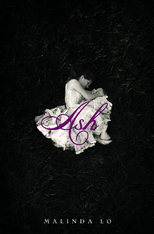


Ash
by Malinda Lo
William C. Morris Debut Award Finalist 2010
A retelling of the fairy tale “Cinderella,” Ash follows the titular character (short for Aisling) in her quest for belonging after the death of both her parents. Treated as a servant by her stepmother due to her father’s outstanding debts, her only solace lies in reading the familiar fairy tales of her childhood. Longing to escape to the fairy world, she is eventually approached by the fairy Sidhean who offers her the opportunity to make her dream a reality. However, she also meets and befriends the king’s huntress, Kaisa, and must choose between the two disparate worlds.

Labeled a lesbian Cinderella story by many reviewers, I expect that a number of conservative parents will be upset by their teens reading this book. It is for that reason that I would like to clarify that there is nothing explicit regarding the relationship between Kaisa and Ash. It is a simple, old-fashioned romance, and I imagine that if the two persons involved were of the opposite sex, no one would think anything of it.

Written with clear, simple prose reminiscent of the fairy tales that directly inspired it, Lo’s debut novel is an enjoyable, albeit brief read. The world in which the novel takes place is fully developed, complete with its own holidays and fairy stories. My only complaint with the book is that the ending was much too neat and predictable. I had hoped that Kaisa would need to sacrifice something in order to prevent Sidhean from taking Ash to live with him in the fairy realm, but no such event occurred. With the vast number of stories relating various quests into the fairy realm to retrieve those taken by the fairies, Sidhean’s willingness to remove his claim upon Ash seemed to be a bit out of character.

While I had my qualms with the work, I am greatly looking forward to Lo's next novel, which is to take place in the same world, albeit a century or two before Ash. I would certainly recommend this to any fans of shoujo ai or of fairy tale retellings.

Grade: B+

*****
The Book Thief
by Markus Zusak
Michael L. Printz Honor Book 2007
When I first started reading this beautifully melancholy book, I was put off considerably by the writing style. The narrator of this particular WWII story is Death himself, but Zusak portrays him as being far more human than the typical scythe-wielding reaper. He has an annoying tendency to stop in the middle of the exposition to focus on one particular word or event, which is always written in bold face. It reminded me quite a bit of Alvy in Annie Hall and his frequent destruction of the fourth wall. And, while it might be perfectly acceptable to have such a narrator in a Woody Allen film, it didn’t suit the mood of this novel at all. It really felt to me like Zusak was somehow trying to be hip, or to connect with his teenage audience.

Literacy and the power of words figure prominently in the work, and not merely because Liesel, the novel’s protagonist, learns to read via the books she steals (or more often, rescues). What amounts to one of the most beautiful scenes in the book occurs when Max, the Jew hiding in Liesel’s basement, presents her with a picture book entitled “The Word Shaker,” in which all the hateful rhetoric of the Fuhrer and the Nazi party is embodied in the form of a forest. One day, a girl lets a single teardrop fall for a man, later planting the seed of friendship that had formed from it. Though the two tend to the tree until it is one of the tallest in the forest, it ultimately falls to the axes of hate and discrimination. Even lovelier than the symbolism of the story itself is what Max uses to write the story: a copy of Mein Kampf that had its pages painted white.

Instead of presenting a tale specifically about the Holocaust and its victims, Zusak instead chose to focus on the lives of everyday German civilians and how the war affected their way of life. Through incidents involving various characters, readers see what became of those who refused to join the Nazi party or for their children to be sent to special academies. I greatly appreciated the author’s efforts to create sympathetic characters in an environment and era that, all too often, are demonized by the US; it is important to remember that not all Germans were the enemy and that many of them were simply trying to go about their lives as normal.

Ultimately, though I disagreed with a few of Zusak’s choices regarding style, I highly recommend this book and can easily see why it has won so much praise. I grew to be very attached to the characters, and as I expect you all to be, as well, I warn you to be prepared for quite the tragic end.

Grade: A

Thursday, August 5, 2010

PSA

Since first deciding to start a blog, I have struggled with decisions over content. This has, more often than not, led me to completely neglect the blog. So, rather than continue to wemble over what to write about, I have come to the decision that this blog will, henceforth, be dedicated solely to children's and young adult literature, as well as any other works that might be adapted for this market. With that in mind, I hope to be writing more frequently here.