Showing posts with label Morris Award. Show all posts

Monday, April 25, 2011

Unpolished Greenstone


Guardian of the Dead
by Karen Healey
Morris Debut finalist 2011

While attending boarding school (due to her parents' plans to travel around the world for a year), seventeen year-old Eleanor "Ellie" Spencer comes face to face with the myths of the Maori people. A black belt in tae kwon do, Ellie is asked by her best friend Kevin's friend, Iris, to teach some stage fighting to the cast of a student production of A Midsummer's Night Dream at a local university, which Iris is directing. When the girl playing Titania suddenly drops out of the production, Iris enlists the help of a bewitching specter of a woman, who takes more than a passing interest in Kevin.

Meanwhile, a series of grisly murders, collectively known as the Eyeslasher murders, have been perpetrated throughout the country, both on the north and south island. As Ellie begins to spend more time with mysterious day-student Mark Nolan, she realizes that the two seemingly disparate events may be related, and not only is her friend Kevin in danger, but the whole of New Zealand.

With so much of its plot steeped in Maori folklore, I was quite intrigued by the premise of Guardian of the Dead, as I was rather unfamiliar with Maori myth, but I was disappointed with the result. The first half of the book, which is about 180 pages, is well-written for a debut work. The tension between the characters builds as the chapters progress, and Reka, the mysterious woman, is rather unnerving. All of this, however, comes to little fruition as the second half unfolds, introducing a convoluted plot where the patupaiarehe (New Zealand's native fair-folk) attempt to gain immortality and reclaim their native land from the Western settlers.

My main complaint with the latter half is that the pace is so brisk that one has a difficult time keeping up with the myriad side characters that are introduced prior to the climactic battle for New Zealand. I would have preferred fewer characters that had been more developed. I also felt that a number of characters had a few enhancing details sprinkled on for flavour that neither added nor detracted from the story. Prof. Garibaldi, Ellie's classics teacher, is American (and, apparently, a magician), but it's never really explained why she's teaching in New Zealand. And Kevin's asexuality seems tacked on, a simple excuse for why he can't become Reka's consort.

Now, I will say that I liked Ellie. It's not every day that the protagonist is an overweight, comic-reading fan girl, so that was refreshing. She was the only character that was completely fleshed out, so I'm glad that she was likable.

All in all, Guardian of the Dead was an entertaining read, but there's not much else I can say about it. I'd be interested in seeing what else Ms. Healey produces, especially if she continues to polish her writing style, but I hope she waits until after finishing her dissertation, as her ideas deserve her full attention.

Grade: B-

Sunday, April 17, 2011

An Astounding Debut


Graceling
by Kristin Cashore
Morris Debut finalist 2009

With her mismatched eyes, Katsa unnerves everyone in her uncle's court. The eyes are a symbol of her status as a Graceling, one who has an exceptional ability...and hers just happens to be killing and torture. Or at least that's what she believes, as she's employed as a glorified thug by her uncle, King Randa.

While participating in a rescue mission of a kidnapped Lienid noble, Katsa has a chance encounter with another Graceling, the Lienid Prince Po, so-called because of his gold and silver eyes. He later comes to Randa's court in the hope of gathering more information about the perpetrator of his grandfather's kidnapping, and while combat training with Katsa, the two become close friends.

Eventually, evidence leads the two to the kingdom of Monsea, where Po's aunt is queen to the mad King Leck, whose Grace enables him to cloud the thoughts of others and to make lies seem to be reality with only his words. Katsa is put to the test protecting the princess from her father and his soldiers while struggling to remember the truth of her quest.

When reading a debut novel, one can usually tell. The characters might not be as fleshed out as one might like, or there will be unfinished plot holes. This is not the case, however, with Ms. Cashore's fully realized debut. It is apparent from the first chapter that much time and thought has been put into both the pacing of the plot and character development. The characters, especially Katsa, are very believably written and, even more importantly, likable. Katsa, with her fear of losing her identity should she marry, reminded me of both Alanna from the Song of the Lioness quartet by Tamora Pierce and Oscar from the 70s manga series Rose of Versailles, so fans of those series (and strong female characters, in general) should definitely check this book out.

I only have one qualm with this novel, and it's a rather minor, stylistic thing. There appear to me a number of phrases and fragments in some more action-oriented scenes, and I realize this is probably to heighten the dramatic effect, but it irritated me a bit. For example, "His boot was caught in a stirrup. The stirrup buckled to the saddle, and the horse sinking fast." The sentence still would have been dramatic had it followed standard conventions and been written thus: His boot was caught in a stirrup, which was buckled to the saddle, and the horse was sinking fast. This didn't really detract from my enjoyment of the book, but it was something I noticed rather frequently and could have done without.

When I reached the end of the book, I was sad to see it end. I had grown attached to the characters as I might those in a lengthy series, and I wanted very much to hear more of their stories. This, to me, is the mark of a true storyteller. I am certainly planning on reading the prequel, Fire, but I am most looking forward to the sequel Bitterblue, as well as anything else graced by Ms. Cashore's pen.

Grade: A

Monday, August 16, 2010

Two Mini Reviews: Ash and The Book Thief

Before I ever had a blog or decided to start reviewing YA and juvenile fiction, I read Ash and The Book Thief for my book club in April and June, respectively. Since it has been a short while since I read these two particular novels, I'm just going to put up a couple of mini reviews. For books I've read more recently, I'm hoping to do more detailed reviews in the near future. If you have any suggestions for format or reading selections, please let me know!


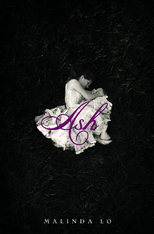
Ash
by Malinda Lo
William C. Morris Debut Award Finalist 2010
A retelling of the fairy tale “Cinderella,” Ash follows the titular character (short for Aisling) in her quest for belonging after the death of both her parents. Treated as a servant by her stepmother due to her father’s outstanding debts, her only solace lies in reading the familiar fairy tales of her childhood. Longing to escape to the fairy world, she is eventually approached by the fairy Sidhean who offers her the opportunity to make her dream a reality. However, she also meets and befriends the king’s huntress, Kaisa, and must choose between the two disparate worlds.

Labeled a lesbian Cinderella story by many reviewers, I expect that a number of conservative parents will be upset by their teens reading this book. It is for that reason that I would like to clarify that there is nothing explicit regarding the relationship between Kaisa and Ash. It is a simple, old-fashioned romance, and I imagine that if the two persons involved were of the opposite sex, no one would think anything of it.

Written with clear, simple prose reminiscent of the fairy tales that directly inspired it, Lo’s debut novel is an enjoyable, albeit brief read. The world in which the novel takes place is fully developed, complete with its own holidays and fairy stories. My only complaint with the book is that the ending was much too neat and predictable. I had hoped that Kaisa would need to sacrifice something in order to prevent Sidhean from taking Ash to live with him in the fairy realm, but no such event occurred. With the vast number of stories relating various quests into the fairy realm to retrieve those taken by the fairies, Sidhean’s willingness to remove his claim upon Ash seemed to be a bit out of character.

While I had my qualms with the work, I am greatly looking forward to Lo's next novel, which is to take place in the same world, albeit a century or two before Ash. I would certainly recommend this to any fans of shoujo ai or of fairy tale retellings.

Grade: B+

*****
The Book Thief
by Markus Zusak
Michael L. Printz Honor Book 2007
When I first started reading this beautifully melancholy book, I was put off considerably by the writing style. The narrator of this particular WWII story is Death himself, but Zusak portrays him as being far more human than the typical scythe-wielding reaper. He has an annoying tendency to stop in the middle of the exposition to focus on one particular word or event, which is always written in bold face. It reminded me quite a bit of Alvy in Annie Hall and his frequent destruction of the fourth wall. And, while it might be perfectly acceptable to have such a narrator in a Woody Allen film, it didn’t suit the mood of this novel at all. It really felt to me like Zusak was somehow trying to be hip, or to connect with his teenage audience.

Literacy and the power of words figure prominently in the work, and not merely because Liesel, the novel’s protagonist, learns to read via the books she steals (or more often, rescues). What amounts to one of the most beautiful scenes in the book occurs when Max, the Jew hiding in Liesel’s basement, presents her with a picture book entitled “The Word Shaker,” in which all the hateful rhetoric of the Fuhrer and the Nazi party is embodied in the form of a forest. One day, a girl lets a single teardrop fall for a man, later planting the seed of friendship that had formed from it. Though the two tend to the tree until it is one of the tallest in the forest, it ultimately falls to the axes of hate and discrimination. Even lovelier than the symbolism of the story itself is what Max uses to write the story: a copy of Mein Kampf that had its pages painted white.

Instead of presenting a tale specifically about the Holocaust and its victims, Zusak instead chose to focus on the lives of everyday German civilians and how the war affected their way of life. Through incidents involving various characters, readers see what became of those who refused to join the Nazi party or for their children to be sent to special academies. I greatly appreciated the author’s efforts to create sympathetic characters in an environment and era that, all too often, are demonized by the US; it is important to remember that not all Germans were the enemy and that many of them were simply trying to go about their lives as normal.

Ultimately, though I disagreed with a few of Zusak’s choices regarding style, I highly recommend this book and can easily see why it has won so much praise. I grew to be very attached to the characters, and as I expect you all to be, as well, I warn you to be prepared for quite the tragic end.

Grade: A