Showing posts with label YA. Show all posts

Tuesday, January 6, 2015

Sara's Library: The Young Elites

The Young Elites by Marie Lu
Book one of The Young Elites trilogy
Putnam 2014
Grade: A


Summary from Goodreads: Adelina Amouteru is a survivor of the blood fever. A decade ago, the deadly illness swept through her nation. Most of the infected perished, while many of the children who survived were left with strange markings. Adelina’s black hair turned silver, her lashes went pale, and now she has only a jagged scar where her left eye once was. Her cruel father believes she is a malfetto, an abomination, ruining their family’s good name and standing in the way of their fortune. But some of the fever’s survivors are rumored to possess more than just scars—they are believed to have mysterious and powerful gifts, and though their identities remain secret, they have come to be called the Young Elites.

Teren Santoro works for the king. As Leader of the Inquisition Axis, it is his job to seek out the Young Elites, to destroy them before they destroy the nation. He believes the Young Elites to be dangerous and vengeful, but it’s Teren who may possess the darkest secret of all. 

Enzo Valenciano is a member of the Dagger Society. This secret sect of Young Elites seeks out others like them before the Inquisition Axis can. But when the Daggers find Adelina, they discover someone with powers like they’ve never seen. 

Adelina wants to believe Enzo is on her side, and that Teren is the true enemy. But the lives of these three will collide in unexpected ways, as each fights a very different and personal battle. But of one thing they are all certain: Adelina has abilities that shouldn’t belong in this world. A vengeful blackness in her heart. And a desire to destroy all who dare to cross her.

What an incredibly long book-jacket summary!  To summarize in one sentence: X-Men meets the Inquisition.  If that doesn't sell you on this book, I'm not sure what will!

I had previously read Ms. Lu's Legend trilogy, so when I first learned she was planning to write a fantasy novel, I immediately added it to my to-read list.  As in her previous work, the chapters are written from one of three perspectives: Adelina, Teren, or Enzo.  The majority of the chapters come from Adelina's perspective, which is somewhat detrimental as it leads to less nuanced characterization for the other players.  While the secondary characters are less well-rounded than I would have liked, I believe the intent here was to present a character study of Adelina, and in that way, the novel is incredibly successful.

Adelina is not meant to be a likable protagonist.  She second guesses everyone's intentions toward her (rightfully so, as we learn!), envies her sister's normality, and has such little control over her powers that she frequently endangers the other Elites.  Her only redeeming quality seems to be her love for her sister, although this is used against her throughout the first installment.  But it is precisely because she is a flawed character that The Young Elites is such a compelling read.  We've already read about the perfect girl-next-door type dozens of times, so it's refreshing to read about a girl with so much self-doubt that it actually fuels her power.

X-Men fans will likely notice character similarities here.  Enzo as Magneto, Raffaele as Xavier, Teren as Jason Stryker, and Adelina as Mystique (especially as depicted in the recent films).  Even with these similarities in mind, the ending came as a surprise for me.  I applaud the book for that alone, as it's usually so easy to predict the outcome in YA novels.

I highly recommend this book to any fans of fantasy and cannot wait for The Rose Society to be released!

Tuesday, November 11, 2014

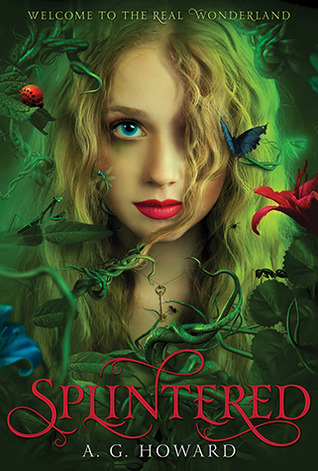
Sara's Library: Splintered

Splintered by A.G. Howard
Amulet Books 2013
YALSA Teens' Top 10 2014
B


Summary from Goodreads: Alyssa Gardner hears the whispers of bugs and flowers—precisely the affliction that landed her mother in a mental hospital years before. This family curse stretches back to her ancestor Alice Liddell, the real-life inspiration for Lewis Carroll’s Alice’s Adventures in Wonderland. Alyssa might be crazy, but she manages to keep it together. For now.

When her mother’s mental health takes a turn for the worse, Alyssa learns that what she thought was fiction is based in terrifying reality. The real Wonderland is a place far darker and more twisted than Lewis Carroll ever let on. There, Alyssa must pass a series of tests, including draining an ocean of Alice’s tears, waking the slumbering tea party, and subduing a vicious bandersnatch, to fix Alice’s mistakes and save her family. She must also decide whom to trust: Jeb, her gorgeous best friend and secret crush, or the sexy but suspicious Morpheus, her guide through Wonderland, who may have dark motives of his own.

This book is everything that Tim Burton's Alice in Wonderland wanted to be.  The Wonderland Ms. Howard creates is a darkly haunting place, where all of Lewis Carroll's creations have been transformed into maniacal and murderous creatures that cannot be trusted.  Gone entirely is the sense of whimsy seen in the original books and the Disney adaptation, as well as any sense of satire.  As such, purists may not care for this "sequel" of sorts, but it does have its merits.

This novel's greatest strength is the amount of intricate detail that Ms. Howard puts into everything from the scenery to the clothes that the characters wear.  As someone who is not particularly visual, I appreciate when writers have a distinct vision of their world and painstakingly describe it to their readers.  However, some might argue that too much focus is put on these details and not enough focus is given to the characters themselves.

I would probably agree that, creative and altruistic Alyssa aside, the main characters are one's standard YA fantasy tropes: the bad boy (Morpheus) and the stalwart friend-turned-lover (Jeb).  I found both of these love interests to be problematic, albeit for different reasons.  Morpheus manipulates Alyssa for nearly the entirety of the novel and is known to be quite the womanizer.  Jeb, on the other hand, while loyal, often treats Alyssa like a kid sister and doesn't respect her autonomy.  While teenage readers will likely swoon for both of them, Alyssa (and the readers) deserve better.

As publishers are wont to do these days, two more books have been written to form a trilogy.  However, Splintered resolves itself pretty neatly, and I'm content to leave the characters as they are, rather than leave myself to the possibility of disappointment with another superfluous sequel.


Saturday, July 12, 2014

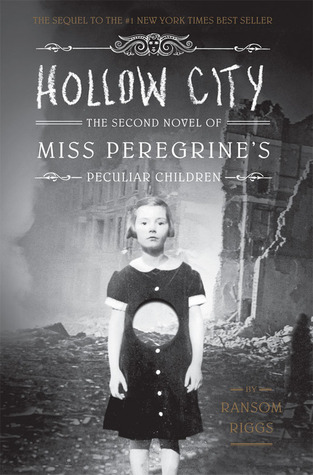
Sara's Library: Hollow City

Hollow City by Ransom Riggs
Book two of the Peculiar Children series
Quirk Books 2014
B-


Summary from Goodreads: Miss Peregrine's Home For Peculiar Children was the surprise best seller of 2011—an unprecedented mix of YA fantasy and vintage photography that enthralled readers and critics alike.

This second novel begins in 1940, immediately after the first book ended. Having escaped Miss Peregrine's island by the skin of their teeth, Jacob and his new friends must journey to London, the peculiar capital of the world. Along the way, they encounter new allies, a menagerie of peculiar animals, and other unexpected surprises.

Complete with dozens of newly discovered (and thoroughly mesmerizing) vintage photographs, this new adventure will delight readers of all ages.

This installment picks up at the exact point where the previous one ended: the Peculiars and Miss Peregrine (trapped in bird form) row away from their island.  It doesn't take long before the Hollows are reintroduced and our heroes are on the run, not only searching for safety but for another ymbryne who may be able to reverse Miss Peregrine's avian state.  With only three days to find a solution or risk losing Miss Peregrine's humanity, this second volume keeps up a rollicking pace for its duration.

One of my chief complaints with the first book was that, Jacob aside, there was little character development.  The majority of the characters fit neatly into an archetype, usually influenced by their power, and were paper thin.  I'm sad to say that there's not much more attention paid to characterization this time around.  It's very much a plot-driven installment, so if you're not interested in mutant kids fighting monsters in the 1940's, this book is not for you.

That being said, it is an entertaining diversion, and I enjoyed the world building through the peculiar animals and the fairy tales.  The photographs didn't seem to enhance the story this time and felt shoehorned in, almost gimmicky.  I'm curious to see how Mr. Riggs uses the photographs in the next volume and hope it will be more like those in the first book.


Sunday, June 29, 2014

Sara's Library: The Precious Stone Trilogy

The Precious Stone trilogy by Kersten Gier
Consisting of: Ruby Red, Sapphire Blue, and Emerald Green
Original German editions: Arena Verlag 2009 (books 1 & 2), 2010 (book 3)
US edition: Henry Holt 2011 (book 1), 2012 (book 2), 2013 (book 3)
Translated from German by Anthea Bell
C


Summary of Ruby Red from Goodreads: Gwyneth Shepherd's sophisticated, beautiful cousin Charlotte has been prepared her entire life for traveling through time. But unexpectedly, it is Gwyneth, who in the middle of class takes a sudden spin to a different era!
Gwyneth must now unearth the mystery of why her mother would lie about her birth date to ward off suspicion about her ability, brush up on her history, and work with Gideon--the time traveler from a similarly gifted family that passes the gene through its male line, and whose presence becomes, in time, less insufferable and more essential. Together, Gwyneth and Gideon journey through time to discover who, in the 18th century and in contemporary London, they can trust.
When every-girl Gwyneth discovers she carries the rare time travel gene, rather than her perfect cousin, she's confused and uncertain what to do.  While Charlotte has been studying foreign languages, history, dance, and etiquette, Gwyneth has spent most of her leisure time watching romantic comedies with her best friend.  As such, the secret organization that has been overseeing such time travelers for centuries is less than confident in her abilities.
Ms. Gier writes a fluffy, plot-driven series of novels that will appeal to teen girls, even those who normally stay clear of genre fiction.  Although there is a talking gargoyle and discussions of alchemy and the philosopher's stone, the series is, at its heart, a romance, albeit it a sloppy one involving insta-love.  While the story is spread across three novels, the plot takes place over the course of a week, so it is rather unbelievable when Gideon professes his love for Gwyneth, even taking into account the perils they survive together in the past.
Gwyneth herself is likable enough, but she's primarily a stand-in for the reader.  What she manages to accomplish is all thanks to her best friend, Lesley, the gargoyle, and a ghost who haunts her private school, the latter two visible thanks to a handy ability to see and speak with spirits.  Everything that happens just seems entirely too convenient, and there's no character development to speak of.  Over the course of three novels, that's unacceptable.

If one is looking for a featherweight romantic fantasy, this might make a nice choice.  But anyone searching for something beyond a few hours of entertainment should look elsewhere.


Saturday, November 30, 2013

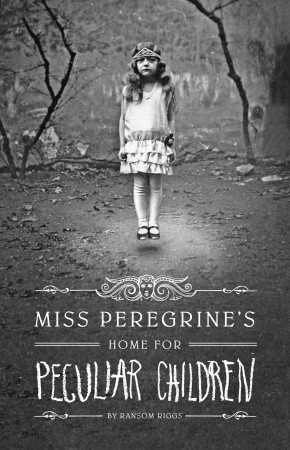
Sara's Library: Miss Peregrine's Home for Peculiar Children

Miss Peregrine's Home for Peculiar Children by Ransom Riggs
Quirk Books 2011
B


Summary from Goodreads: "A horrific family tragedy sends Jacob, 16, to a remote island off Wales, to the crumbling ruins of Miss Peregrine's Home for Peculiar Children, where he finds unusual old photographs. The children, one his grandfather, were more than peculiar, perhaps dangerous, quarantined for good reason - and maybe still alive."

I had expected this novel, which includes a number of strange, antique photographs, to read more like one of Brian Selznick's hybrid novels.  However, rather than using the photographs to propel the story forward as the illustrations in Mr. Selznick's novels do, here the photos simply serve to enrich the prose descriptions of the peculiar children and to legitimize the narrative as "true."  While some of the photographs were delightfully creepy and really did add to the narrative, I'd like to see the next installment come closer to being a hybrid.  

The novel moves along at a fairly fast pace, dividing its time between the present and the WWII era past of the peculiar children, which is a continuous loop of the day the home is bombed.  With the pacing as it was, there was little time devoted to character development, which was the biggest disappointment of the book.  Most of the peculiars are archetypes (the brain, the brawn, the dreamgirl) and more seems to be made of their peculiar abilities than of their personalities or histories.  As such, I found it difficult to become invested in the characters themselves, even the protagonist Jacob, who is a more relaxed version of the average shounen anime hero.  

That being said, the idea of combining the plot  X-Men with that of Bleach was an interesting one, as I'm sure many of us have often wondered what it would be like if mutants fought against supernatural monsters.  This first volume is executed well, despite its thin characterization, which will hopefully be improved upon in the next volume.

Tuesday, May 21, 2013

Sara's Library: Girl of Nightmares

I had an unexpected hospital stay, which has delayed a number of my posts.  I'm going to try to get at least two up a week until I'm caught up, but a friend just asked me to critique his manuscript, so I'm not sure how I'll be dividing my time just yet.
***

Girl of Nightmares by Kendare Blake
Sequel to Anna Dressed in Blood
Tor Teen 2012
A

Summary from Goodreads: "It's been months since the ghost of Anna Korlov opened a door to Hell in her basement and disappeared into it, but ghost-hunter Cas Lowood can't move on. 

"His friends remind him that Anna sacrificed herself so that Cas could live—not walk around half dead. He knows they're right, but in Cas's eyes, no living girl he meets can compare to the dead girl he fell in love with.

"Now he's seeing Anna everywhere: sometimes when he's asleep and sometimes in waking nightmares. But something is very wrong...these aren't just daydreams. Anna seems tortured, torn apart in new and ever more gruesome ways every time she appears.

"Cas doesn't know what happened to Anna when she disappeared into Hell, but he knows she doesn't deserve whatever is happening to her now. Anna saved Cas more than once, and it's time for him to return the favor."

Review: Readers will remember that when I picked up Anna Dressed in Blood, I had rather low expectations but ended up enthralled with the characters and story.  I am happy to say that Girl of Nightmares is a worthy successor and conclusion.

As stated in the description, Cas is seeing Anna everywhere, but it's after a ghostly encounter that endangers both Thomas and Carmel that Cas decides that something must be done.  His intuition tells him that Anna is not properly at rest, and cryptic statements made by Thomas's uncle, Morfran, and Gideon, Cas's advisor, lead him to believe that Anna is in Hell.

While the adults in Cas's life warn him not to meddle with the afterlife and move on, Thomas and Carmel support his decision to investigate Anna's whereabouts and free her, if necessary.

Ms. Blake continues to write a likeable Buffy-esque gang of ghost hunters, who manage to deal with normal teen problems while juggling their eerie escapades.  With this installment taking place over summer vacation, we get less of Cas's interaction with the general student body and more of his growing friendship with the unlikely couple Thomas and Carmel.  As with the first book, Ms. Blake shows a penchant for writing sarcastic, disaffected teens.

New character Jestine, raised by a British cult, is a great foil to Cas, who never asked for the power and responsibility of the athame.  She also provides fresh perspective on the task at hand, as she is not affiliated with Cas and has motives of her own for crossing the threshold to Hell.  Her presence definitely raises the stakes.  The book wouldn't likely have been a flop without the Jestine subplot, but it's certainly greater for her presence.

The ending offers an unexpected resolution where Anna is concerned, but leaves room for further adventures with Cas and the gang should Ms. Blake choose to deliver them.

Monday, February 25, 2013

Sara's Library: Clockwork Angel

Clockwork Angel by Cassandra Clare
Book one of The Infernal Devices trilogy
Margaret K. McElderry Books 2011
C
During Victoria's reign, a teenage American from New York, Tessa Gray, travels to London at her older brother's request.  However, once she arrives, she is imprisoned by the evil Dark Sisters, who force Tessa to use her previously untrained shapeshifting abilities and speak of a marriage between Tessa and someone known only as the Magister.

Enter Will Herondale, a reckless bad boy in the employ of the London Institute, an organization dedicated to protecting our world from Downworlders (vampires, demons, and the like).  Rescuing Tessa from the sisters,   she is inducted into the world of the Shadowhunters, who agree to help her find her missing brother, in return for her cooperation in stopping a plot against the Institute.

There were a lot of problems with this book.  I'm really not sure where to begin.  The setting was meant to be Victorian London, but the characters felt far too contemporary to have been inhabitants of it.  Will was especially anachronistic, espousing the favored sarcasm and brooding of YA love interests today.  Despite being a womanizing gambler who spends far too much time in the seediest districts, we're led to believe that because he can recite poetry, he's a good match for our protagonist.  I am well and truly tired of these bad boy characters who, with the love of the female protagonist, change into something better.  It's unrealistic and, worse than than, such pairings lead impressionable young girls to think such relationships are ideal.  I'm glad that by the end of the book it seemed like Tessa might prefer Will's quiet friend, Jem, though I doubt she will wind up with him by the end of the trilogy.

The pacing was a mess.  There were a number of times where I simply wanted to stop reading because nothing of consequence was happening and the writing was not of the quality I am used to reading. There are large portions dedicated to mundane tasks, and given that the characters are wooden archetypes, it wasn't very interesting.  But Ms. Clare did write semi-decent battle scenes, and I wasn't positive of the identity of the Magister from the beginning, so it wasn't a total waste of time.

Each chapter begins with a random quote from a piece of literature, but said quotes rarely paralleled the events of the chapter, so I'm really not sure of their purpose.  Tessa is a bookworm, yes, but the quotes were far from necessary.

And it's perfectly clear that the Victorian setting and inclusion of automatons is simply to cash in on the popularity of steampunk.  I doubt Ms. Clare knows anything about the sub-culture, though, to be fair, few people writing steampunk novels do.

One positive: Although a steampunk rip-off of Twilight, Tessa does have a personality.  And her shapeshifting abilities make her far more capable than Bella ever was.  I might read the second installment to see if it improves any, as I did like Jem, but I'm not in any hurry to do so.

Wednesday, February 20, 2013

Sara's Library: The Scorpio Races

The Scorpio Races by Maggie Stiefvater
Scholastic 2012
Printz Honor Book 2012
Mythopoeic Fantasy Award for Children's Literature Nominee 2012
B+


On the island of Thisby, every November flesh-eating water horses compete in the Scorpio Races, an ancient ritual that has evolved into a tourist attraction and one of the island's only sources of profit.  Puck (a.k.a. Kate) lost her parents to the water horses, but when her older brother Gabriel announces that he's leaving for the mainland, Puck decides she must enter the race (and win) in order to save the family home from being repossessed.  While already facing the inherent struggles of racing carnivorous beasts on the back of her beloved horse, she also must face the bullying of the sexist townspeople, who believe a girl shouldn't be racing.

And then there's the mysterious Sean Kendrick.  Abandoned by his mother as a small child and orphaned when his father was killed by a water horse, Sean has made his living working at one of the island's stables, capturing and training the water horses, and has won four Scorpio Races already.  While he must win this year's race to buy his favorite water horse from the stable owner, when he meets Puck, he becomes determined to help her win, as well.

I had really enjoyed Ms. Stiefvater's Wolves of Mercy Falls trilogy, although I do feel it would have been better as a stand-alone novel (some of the events in the later books are just too far-fetched!).  So I was very much looking forward to reading this, especially after it won the Printz Honor.  But...I was rather disappointed, to be honest.  The book was good, but it was not the amazing experience that I was expecting.

As with the Mercy Falls books, the POV shifts between Puck and Sean in alternating chapters.  However, unlike those books, the two protagonists read very much the same, aside from the occasional bit of sarcasm on Puck's end.  Were it not for the character names emblazoned above each chapter, I probably would not have known from whose perspective I was experiencing things 80% of the time, save from contextual clues, such as interactions with other characters (i.e. Puck's brothers, the stable owner, etc.).  It seemed like a step backward for Ms. Stiefvater and I was quite surprised.

For me, at least, this book was a bit of a slog.  I appreciated the world-building, especially the mythology behind the races, the parade, and the initiation of the riders, but it felt like the pacing was off.  When something is called The Scorpio Races and said races take place in the last twenty pages, there is a problem.  I understand that the book was very much about the people involved in the races, and the tourism, and the horses, but that was more than 3/4 of the book.  I don't think I'm alone in having expected an exhilarating race, and what I received was underwhelming at best.

There's no question that Ms. Stiefvater is a talented author, but I don't feel this was her best effort.  I still need to read The Raven Boys, but I am hoping the issues present here have been fixed and I can go back to loving her work.


Tuesday, November 20, 2012

Sara's Library: Anna Dressed in Blood

First of all, apologies for the lack of updates.  While I had started this post almost two weeks ago, I found myself suddenly very busy with real life.  Between staffing a local convention and a couple of job interviews, I just haven't had time to work on the blog.  I'm hoping to catch up over the Thanksgiving holiday.

Anna Dressed in Blood by Kendare Blake
Tor Teen 2011
YALSA Best Fiction for Young Adults 2012
A

There have been few books I can recall where my initial reaction to the premise and my final reaction are so completely disparate.  Going in, all I really knew about the plot was that the protagonist, Cas Lowood, went around the country (and Canada, apparently, given the novel's Ontario setting) slaying ghosts with his father's magic dagger (an athame).  It sounded like a lame attempt at writing a prose version of Bleach.  I have never been more wrong about a book.

Shortly after traveling to Thunder Bay, Ontario, in order to rid the town of the infamous Anna Dressed in Blood, events spiral out of Cas's control.  Not only does a prank played upon him by the school football team result in the death of one of the jocks at the hands of Anna, but Cas, so accustomed to the nomadic lifestyle that is part of his job, begins to develop attachments.  He befriends a psychic witch-boy and the most popular girl in school, both of whom insist upon tagging along during his midnight slayings, and eventually learns that he cannot complete his task without the aid of others.  Yet, more interestingly, he develops a strong bond with the ghost herself, Anna, whom he learns is a tragic, fragile creature trapped inside her place of death.

While Ms. Blake's work never shies away from the violence and gore that denote the work as horror, it is her juxtaposition of horror with sarcastic, referential humor that sets this work apart from others in the genre. Fans of Buffy the Vampire Slayer will definitely see shades of the Scooby Gang here, which is all for the better.  Without the humor, this tale would likely have proven too grim for the average reader.

The characters, especially Cas and Anna, are well-thought out and complex for the book's relatively short length, and the brisk pacing ensures that readers never tire of the dark events that could easily have become mired in a lengthier work.  A new sequel, Girl of Nightmare, continues the story, which ends somewhat abruptly, and promises to give fans another thrill ride, if the reviews I've read are any indication.

Saturday, November 3, 2012

Sara's Library: This Dark Endeavor

This Dark Endeavor by Kenneth Oppel
Simon & Schuster 2011
ALA Teens' Top Ten Nominee 2012
Bram Stoker Award for Young Adult Novel Nominee 2012
A-

I have been a fan of the macabre and gothic for as long as I can remember.  I think I first read Poe in third grade, which I followed up the next year with Hugo's Notre Dame de Paris.  Although Frankenstein was assigned reading during my senior year of high school, I had read it years earlier.  So when I began to see reviews for Kenneth Oppel's prequel, This Dark Endeavor, I knew I had to read it.


In this prequel, Victor Frankenstein has an identical twin brother, Konrad, who he believes to be his better at just about everything.  When Konrad becomes ill with an unknown (and perhaps incurable disease), Victor, his cousin Elizabeth, and their friend Henry decide to save him...through alchemy.  The trio discover a secret library of alchemical texts in the Frankenstein manor, but cannot decipher the archaic texts.  Learning of a disgraced alchemist, Dr. Polidori, living in the slums of Geneva, the group seek out his aid and soon embark on dangerous adventures for the ingredients required for the Elixir of Life.

Meanwhile, the family solicits the advice of an experimental doctor who determines that Konrad's disease is what we now know as leukemia.  While he is able to improve Konrad's condition, he cannot cure it, driving Victor to try yet harder to create the Elixir.

But is it truly brotherly love that drives Victor into this frenzy?  Or the desire to excel at something which his brother never can?  Darker yet, is Victor's secret desire to usurp his brother, especially in the heart of Elizabeth.

One of my only qualms with this book is that it doesn't stylistically mirror its "descendant."  While that marvelous work was an epistolary novel, this one is not.  The prose attempts to affect the style of the period, though I did find Victor's sense of humour a tad out of place, feeling somewhat modern at times.  While the characters are not the most complex or original, often falling into tropes of young adult fiction (snarky protagonist, headstrong girl, etc.), the work substantially reworks Ms. Shelley's story, leading readers to piece together that Victor's later creation is not a mishmash at all, but his brother.  Given the love triangle developing between the brothers and Elizabeth, one can imagine there will be bad blood between the two before events lead to the Modern Prometheus.

Mr. Oppel has already written a second work in the prequel sequence, titled Such Wicked Intent and released at the end of August.  While I've not yet had a chance to read it, I certainly intend to, and if the title is any indication, we can expect it to grow considerably darker.

Monday, January 2, 2012

New Year, New Format: 2011 Week 52

Given the amount of books that I read within a month, I often find that I simply don't have time to stop and write about all of them. So, rather than writing lengthy entries on the newest releases, I've decided to use a new format this year, writing a weekly entry with short reviews of all the middle grade and ya books I've read in a week. Posts will typically go up on Saturday or Sunday.

Nearly all of the books in this week's post were required for an upcoming class. Future weeks should be more of a mix of required and leisure reading; we were assigned 15 books to read by the first day of this particular class, but subsequent weeks have no more than three assigned.

Week 52

Title: The Ruins of Gorlan (Book 1 in the Ranger's Apprentice series)
Author: John Flanagan
Publishing Date: 2004/Australia; 2005/US
Reason Read: required for YA Resources
Awards:Aurealis Award for Best Children's Novel short list 2004


My older brother, who has recently started reading ya novels, had actually recommended this series to me over the summer, so I was glad to see it on the required reading list. Telling the story of an orphaned boy who becomes an apprentice to a ranger (think of the D&D class or Aragorn), The Ruins of Gorlan bridges the gap between The Prydain Chronicles and The Lord of the Rings, with a brisk enough pace to hold the attention of reluctant readers and enough action to satisfy them, as well. The story may be a bit cliche, but the characters are likeable and the writing above-average. While the first installment felt resolved, there are enough loose threads to warrant looking at the next volume.

Grade: B

Title: The Burning Bridge (Book 2 in the Ranger's Apprentice series
Author: John Flanagan
Publishing Date: 2005/Australia; 2006/US
Reason Read: I enjoyed the first book and wanted to see how the series would continue -- I plan on reading the first four books as of now
Awards: N/A


Within the first installment, the over-arching plot involving Morgarath was not resolved. This volume focuses on the impending battle with Morgarath and his minions. Will and his friend Horace are the protagonists here, along with a new character named Evelyn who they encounter on their journey. Both boys have an opportunity to shine, Will with his wits and Horace with his sword. Much of the same is present in this second book of the series, which ends unresolved (at least where Will is concerned). Not as strong as the first installment, but I can see why it remains popular.

Grade: B-

Title: Seventeenth Summer
Author: Maureen Daly
Publishing Date: 1942
Reason Read: required for YA Resources
Awards: N/A


Often considered one of the first young adult novels, Seventeenth Summer was actually written when the author herself was seventeen. The story is rather generic, concerning the first love of a girl about to leave home to attend college. At first, I found it difficult to read, as the dialogue is so trite and corny, but eventually its 40's charm grew on me. It's certainly dated and not for everyone (especially readers accustomed to today's steamy teen romances), but it's fluffy and cute -- perfect for someone who enjoys retro romance.

Grade: B-

Title: The Catcher in the Rye
Author: J.D. Salinger
Publishing Date: 1951
Reason Read: required for YA Resources (previously read junior year of high school)
Awards: Modern Library's 100 Best English-language Novels of the 20th Century


This book needs little introduction, as it's read in high school classrooms all over the country. I never really stopped to consider it as a ya novel before, and I still question that label, despite Holden's age and the issues he deals with in the novel, as I don't think Mr. Salinger's intention was to write for a teenage audience, but a universal audience. Despite its age, The Catcher in the Rye holds up rather well, although like Ms. Daly's book, some of the dialogue does seem a bit dated. I think I appreciated the book more the second time around, though.

Grade: A-

Title: The Outsiders
Author: S.E. Hinton
Publishing Date: 1967
Reason Read: required for YA Resources
Awards: N/A


Another example of early ya written by a teenager, The Outsiders is a bleak account of a band of greasers and the trouble that ensues when one of them kills a rich kid in self-defense. While on the lam, the killer saves a group of children from a burning building and becomes a hero, though gravely injured himself. The kids from the wrong side of the tracks are presented as victims of circumstance here, enabling readers to empathize with them, despite their background, which was rather ground-breaking at the time. I can definitely see why so many high schools require this to be read, as it's brilliantly written and remains poigant today.

Grade: A

Title: The Chocolate War
Author: Robert Cormier
Publishing Date: 1974
Reason Read: required for YA Resources
Awards: N/A


A realistic, albeit brutal, portrayal of the mob mentality present in high schools, The Chocolate War concerns a secret society at a boys' prep school and a freshman who refuses to follow their orders to participate in a chocolate fundraiser. Mr. Cormier's attention to gritty detail helps this work to stand out, although the ending left me cold, as the antagonists receive no form of punishment and the acting headmaster seems pleased with the lawless behaviour of the secret society. Perhaps I'm being too idealistic, but I would have preferred a more satisfying conclusion.

Grade: A-

Title: Forever
Author: Judy Blume
Publishing Date: 1975
Reason Read: required for YA Resources
Awards: N/A


One of the first ya novels to frankly discuss teenage sexuality, Forever concerns the relationship between two high school seniors, including their decision to engage in sex. It's a breezy read with relatively accurate portrayals of teenage love, although I question whether a girl would actually refer to a boyfriend's member by a silly name like Ralph and the parents seem a bit too open to the idea of their teenage daughter having sex. These details aside, it tackles not just sexuality itself, but the consequences that come from it, as well as the difficult question of what to do when a relationship ends.

Grade: B+

Sunday, December 4, 2011

Luke Aaluk's School Days


My Name Is Not Easy
by Debby Dahl Edwardson
National Book Award finalist 2011

In the 1960's, an Inupiaq (Eskimo) boy called Luke, whose real name is too difficult to for non-Inupiaq to pronounce, is sent to a Catholic boarding school, along with his two younger brothers, to complete his education. The majority of the students are other Inupiaq kids and kids from the Athabascan tribe, and the two groups do not get along. Speaking their tribal languages is forbidden, and the boys find it difficult to live under the guidelines imposed by the strict Catholic faculty.

While the subject matter is interesting, primarily because there is little fiction pertaining to Native Alaskan matters, and I certainly learned a decent amount about various real-life incidents like the Duck-In and iondine-131 testing among students, I found the writing to be distracting and a bit sloppy. At the beginning of each chapter, Ms. Edwardson would note the character upon whom the chapter would focus, but the POV for specific characters would shift throughout the book. For example, the majority of Luke-focused chapters would be written in first-person through his perspective; however, near the end of the book a clearly marked Luke chapter is written in third-person for no apparent reason. This happens with a few other characters, as well.

Also, since there's no over-arching plot, the book reads more like a series of school vignettes. Unfortunately, this has a negative effect upon readers' emotional connection to the characters, so when dramatic events take place, such events did not have the impact they might have had with a better writer.

My Name Is Not Easy is the second National Book Award finalist that I have had qualms about. It, and the previously reviewed Inside Out and Back Again both seem, to me at least, to have been nominated because of their diverse subject matter alone, and not because of the strength of their writing or expected longevity.

Grade: B-

Monday, October 3, 2011

The Black Creek Project

Shine
by Lauren Myracle

I devoured this book in one sitting about a week ago for my first book club meeting here in Pittsburgh. At least for the time being, our plan is to read buzz books for the upcoming Newbery and Printz awards, and this was a selection for the latter.

Cat is a sixteen year-old girl in a tiny North Carolina backwater. Her best friend, Patrick, is an effeminate loner who was raised by his grandmother (until her recent death). The book begins with a newspaper article detailing a horrible hate crime committed against Patrick in which he was knocked unconscious by a baseball bat and tied to the gas pump at the station where he worked as a clerk, a gas nozzle stuffed down his throat with a note reading "Suck on this faggot" nearby. He is in a coma, and the local police seem to be doing little to find the culprit. Cat decides to take matters into her own hands and solve the mystery.

Ms. Myracle did a good job in detailing what life in a rural Southern town is like: kids dropping out of school, teen pregnancies, drug abuse problems, bigotry. I particularly liked the ladies who attended church to gossip rather than worship, as well as the portrayal of a closeted athlete and his self-denial. The pacing was brisk, while still managing to tie up the various plot threads by the end, but the writing was just adequate.

My major qualm with this book is that the hate crime committed against Patrick is really just a vehicle to discuss the destructive power of drugs, namely meth. I was expecting an LGBT book, and this doesn't quite fit the bill. This is an anti-drug book. While I don't think the hate crime angle would have worked properly if Patrick hadn't been a gay character, I am rather bothered that he was used in such a degrading manner to tell a compelling story. It reminds me a bit of the "women in refrigerators" from 90's era comics.

Given its subject matter, I can understand why Shine was chosen as a buzz book. I do not feel, however, that it is worthy of winning the Printz medal, as the material could have been handled better by a more capable writer. I'll be the first to admit it's a good read, but this is of the page-turner best-seller variety, not the literary award variety.

Grade: B

Monday, September 12, 2011

"Chasing the summer I spent with you, I pass through the end of winter."


Forever
by Maggie Stiefvater

I previously reviewed The Wolves of Mercy Falls trilogy this spring and had been eagerly awaiting the final installment, which was slated for publication in July. As soon as I received proof of residency and was able to obtain my library card here, I put the book on reserve, with 42 people ahead of me. Last week, I received the e-mail stating it was on hold for me, and I picked it up on Thursday night, finding time to read it this weekend.

Was it worth the wait? Definitely. I have to admit, after reading Linger, I felt that Shiver would have been better served as a stand-alone novel. I didn't like the addition of new characters and the switch between POV each chapter, not to mention the mad science and the increasing implausibility of the entire scenario. While those things are still present in Forever (and the solution to the pack's problems feels like a total deus ex machina), Ms. Stiefvater's brilliant writing convinces even the most skeptical reader that certain actions are feasible.

Just as in Linger, the narrative is split four ways between Sam, Grace, Isabel, and Cole, who channels more of his mad scientist persona than his rock star one in this installment. While the trilogy predictably ends happily, there are some twists and turns along the way.

What I especially enjoyed with this installment was the writing of the wolves. It can be rather difficult to portray animal intelligence accurately, but I think Ms. Stiefvater hit the nail on the head.

While I stand by my earlier statement that the idea works best as a stand-alone, since the trilogy does exist, I wouldn't want its last installment to be any other way.

Grade: A-

*Note: The title of this post comes from the translated song lyrics of "Cloud 9", a song from the TV anime Wolf's Rain, which I highly recommend if you're looking for another wolf-related property, or simply a great show.

Wednesday, June 8, 2011

More Than This Provincial Life

First, I'd like to apologize for my long absence. I've spent the last few weeks packing everything I own, moving 450 miles from Chicago home to Pittsburgh, and settling into the new apartment. For much of that time, I've been without Internet, so I'm only just now getting to write about the following book. I am also currently without a library card, having just moved, so posts may be sporadic for the next few weeks.

A Northern Light
by Jennifer Donnelly
Carnegie Medal 2003, Printz Honor Book 2004

In her small turn-of-the-century upstate New York town, Mattie Gokey is considered a bit peculiar. Along with her best friend, Weaver, she continues to attend the town schoolhouse daily, despite being sixteen, in the hopes of receiving her diploma and attending Barnard College. With her mother recently deceased, however, as the oldest child Mattie is expected to tend to her father's farm and her younger sisters. College, and the life it could bring, is a distant dream.

While working a summer job at a neighbouring hotel, the Glenmore, Mattie finds herself embroiled in a murder case, as she is the recipient of a number of letters the victim had written. Despite having been asked to burn the letters by the victim prior to her death, Mattie keeps them, slowly unraveling the motive of the murder.

The book tends to be marketed as a mystery due to the subplot involving the Grace Brown murder, but I would categorize it as an historical slice-of-life novel, as the focus throughout is on Mattie and the various events occuring around her. Those expecting a whodunit mystery will be rather disappointed here.

I felt that Ms. Donnelly did a wonderful job in conveying what ordinary life was like in rural New York in the early 1900's, from detailing mundane farm chores to the attitudes of the day concerning feminism and racial prejudice.  Her meticulous research is not just apparent from the lengthy bibliography in the back of the book, but from the quality and accuracy of the writing itself, which is somewhat rare, even in historical fiction.

More than anything, this book appealed to me because I liked the character of Mattie so much.  I could very easily relate to her, as I was always the odd one with my nose in a book, dreaming of distant locales more interesting than my own, and I thought the "word of the day" chapter headings were a fantastic touch, given Mattie's obsession with vocabulary and writing.  I do have to wonder, though, if the Disney version of Beauty and the Beast had any influence over Ms. Donnelly's writing, as Mattie often reminded me of Belle, just as her love interest, Royal, was a somewhat less chauvinistic Gaston.

Grade: A

Thursday, May 19, 2011

Another Powerful Heroine, Courtesy of Kristin Cashore

Fire
by Kristin Cashore

Set in the same world as Graceling thirty-five years earlier, Fire recounts the tale of the last human monster in the Dells. Though able to both read and control the thoughts of others, Fire chooses not to intrude upon the minds of those around her, using her powers only as a last resort in matters of self-defense. However, when two noblemen begin to plot against the king, the crown asks her to use her powers to aid in interrogating spies, and she eventually agrees to do so.

Like Katsa, Fire is a wonderfully written female protagonist. She fears becoming manipulative, as her father was, relishing her power over others. She yearns for children, but promises herself she won't bring any other monsters into the world. Though considered a monster because of her abilities, Fire's hopes and fears demonstate how very human she is.

While the story is derivative in some aspects, Ms. Cashore's brilliant characters manage to invigorate the story. I will admit I found the book a bit tedious at the beginning when Fire and her long-time friend Archer were the only major characters, as Archer's treatment of Fire bothered me, but once the plot moved into King's City and introduced the royal family, I felt the pace picked up significantly. My only other major complaint is with the final chapter's abrupt segue away from the climatic battle to a memorial service some time later. I would have liked to have read more about the battle, rather than to simply be told of its outcome in a few paragraphs. So much of the book built up to that moment that it was a bit of a let down to have so little time devoted to it.

All told, Fire proves to be an entertaining diversion, but I feel it did not quite live up to my expectations after having read its predecessor.

Grade: B+

Sunday, May 15, 2011

"What an incomprehensible machine is Man!" -- Jean Nicolas Demeunier


The Astonishing Life of Octavian Nothing, Traitor to the Nation Vol. I & II
by M.T. Anderson
National Book Award 2006 (Vol. I), Printz Honor Book 2007 (Vol. I), Prinz Honor Book 2009 (Vol. II)

When I first read Octavian Nothing last year after receiving the books for Christmas, both volumes quickly became two of my favourite works for young adults (surpassed only by the His Dark Materials trilogy). In my book club, volume one had been nominated twice, losing both times by only one vote, before finally winning after its third nomination. I had been wanting to re-read the books for some time now, but book club gave me an excuse to put aside new books in order to do so.

The premise of the novel concerns a young boy, called Octavian, who is being raised by the Novanglian College of Lucidity in Boston in the years leading up to the Revolutionary War. His mother, Cassiopeia, claims to be a princess, and the boy is taught Greek, Latin, music, etc. as any child of the nobility might. Things are not as they seem, however, as Octavian and his mother are actually African slaves, and the boy is taught in the classical method as an experiment in which the collegians are attempting to determine if Africans are as mentally capable as their European counterparts.

After his mother rebuffs the sexual advances of a nobleman from whom the college hopes to receive investments, both she and Octavian lose many of their previous privileges, though Octavian's schooling does continue in part.

The latter half of the first volume and the entirety of the second detail Octavian's involvement in the Revolutionary War, first on the side of the rebels and later as a member of Lord Dunmore's Ethiopian Regiment. While the beginnings of Mr. Anderson's work asks its audience to question the so-called benevolence of the College, this latter half is even more philosophical, asking what liberty is and whether it can truly be bestowed upon humanity so long as governments exists.

An epistolary novel, both volumes are mainly comprised of the diary entries of Octavian Nothing, as well as various letters, advertisements, and other documents that aid the telling of his tale. As such, Mr. Anderson does a truly brilliant job making his audience believe that this journal was written in the 1700's, using archaic spelling and grammar. While this might cause the work to be viewed as difficult to the average teenage reader, I think Mr. Anderson should be commended for his authenticity, as well as for his historical accuracy.

Although such dense language often causes characterization to become lost in the mire, there is no such problem here. The characters are quite vividly portrayed, well thought-out, and, often, sympathetic. The language is such that one can genuinely feel the characters' doubts and hopelessness, as well as their joys. And, given its epistolary nature, I think this is a great accomplishment.

Grade: A+

Monday, April 25, 2011

Unpolished Greenstone


Guardian of the Dead
by Karen Healey
Morris Debut finalist 2011

While attending boarding school (due to her parents' plans to travel around the world for a year), seventeen year-old Eleanor "Ellie" Spencer comes face to face with the myths of the Maori people. A black belt in tae kwon do, Ellie is asked by her best friend Kevin's friend, Iris, to teach some stage fighting to the cast of a student production of A Midsummer's Night Dream at a local university, which Iris is directing. When the girl playing Titania suddenly drops out of the production, Iris enlists the help of a bewitching specter of a woman, who takes more than a passing interest in Kevin.

Meanwhile, a series of grisly murders, collectively known as the Eyeslasher murders, have been perpetrated throughout the country, both on the north and south island. As Ellie begins to spend more time with mysterious day-student Mark Nolan, she realizes that the two seemingly disparate events may be related, and not only is her friend Kevin in danger, but the whole of New Zealand.

With so much of its plot steeped in Maori folklore, I was quite intrigued by the premise of Guardian of the Dead, as I was rather unfamiliar with Maori myth, but I was disappointed with the result. The first half of the book, which is about 180 pages, is well-written for a debut work. The tension between the characters builds as the chapters progress, and Reka, the mysterious woman, is rather unnerving. All of this, however, comes to little fruition as the second half unfolds, introducing a convoluted plot where the patupaiarehe (New Zealand's native fair-folk) attempt to gain immortality and reclaim their native land from the Western settlers.

My main complaint with the latter half is that the pace is so brisk that one has a difficult time keeping up with the myriad side characters that are introduced prior to the climactic battle for New Zealand. I would have preferred fewer characters that had been more developed. I also felt that a number of characters had a few enhancing details sprinkled on for flavour that neither added nor detracted from the story. Prof. Garibaldi, Ellie's classics teacher, is American (and, apparently, a magician), but it's never really explained why she's teaching in New Zealand. And Kevin's asexuality seems tacked on, a simple excuse for why he can't become Reka's consort.

Now, I will say that I liked Ellie. It's not every day that the protagonist is an overweight, comic-reading fan girl, so that was refreshing. She was the only character that was completely fleshed out, so I'm glad that she was likable.

All in all, Guardian of the Dead was an entertaining read, but there's not much else I can say about it. I'd be interested in seeing what else Ms. Healey produces, especially if she continues to polish her writing style, but I hope she waits until after finishing her dissertation, as her ideas deserve her full attention.

Grade: B-

Monday, April 18, 2011

Free to Be


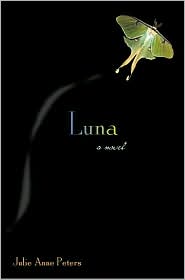
Luna
by Julie Anne Peters
National Book Award finalist 2004, Stonewall Honor Book 2005, Lambda Award finalist 2005

Regan's brother Liam has always been a bit different. His best friends have always been girls and he's always had an interest in fashion. His father suspects that he might be gay, but only Regan knows the truth. Liam is transgendered. Every night she keeps Regan up at odd hours while she dons her dresses, wigs, and make-up, permitting her true self, Luna, to emerge.

This novel is essentially the story of Luna's transition, as seen through Regan's eyes. Unfortunately, with its contemporary setting in the western United States, that story is not a very pleasant one. In addition to a male chauvisnist father and a pill-popping mother who refuse to accept the reality of the situation, Luna has to deal with the taunting of her classmates and local townspeople. With the lack of support and understanding presented to her, Luna contemplates suicide numerous times, and without Regan, who, despite her selfish wish that Luna was not so different, provides the only moral support in this difficult period of Luna's life, she may well have done more than contemplate.

Ms. Peters does a good job of explaining a complex and somewhat controversial topic in terms that a younger audience can understand, though I feel that the book would have been more powerful if told through Luna's point-of-view, rather than Regan's. The decision to use Regan as narrator has ensured that the audience remain outsiders incapable of understanding the problems of a transgendered youth first-hand. While Regan is sympathetic of Luna's plight, she can never truly understand the thought processes that go through Luna's mind, and thus, neither can the readers. True, some readers may be alienated by a book told from the perspective of a transgendered individual, but if so, this book was not written for them in the first place.

I found Regan to be a rather selfish character, more concerned with how her classmates and potential boyfriend would view her as Luna's sister than with how Luna was coping with her situation. Also, I felt that the characterization could have been stronger. Some aspects of the characters, such as their interests and hobbies, seemed like they were just tossed in as an after-thought. For example, Luna apparently is a manga fan, as exemplified by a scene in which her friend Aly returns a copy of Love Hina. But this interest is never explored, which makes me think the author was merely trying to retain the contemporary feel without any knowledge of the pop culture she mentions in passing.

Also, I realize that I am probably ridiculously naive and idealistic, but I seriously had to keep reminding myself that such biased individuals as Jack, the father of Regan and Luna, actually exist. I know that discrimination is still a major issue, especially in the transgender commmunity, but I can't fathom why. People are people. It's very simple. And we should all be free to live our lives however we may choose, provided that no one else is harmed.

I am glad this novel exists so that it might provide some understanding to people who otherwise might fear or mock transgendered people. While there were some minor flaws, I would still gladly recommend this novel.

Grade: A-

Sunday, April 17, 2011

An Astounding Debut


Graceling
by Kristin Cashore
Morris Debut finalist 2009

With her mismatched eyes, Katsa unnerves everyone in her uncle's court. The eyes are a symbol of her status as a Graceling, one who has an exceptional ability...and hers just happens to be killing and torture. Or at least that's what she believes, as she's employed as a glorified thug by her uncle, King Randa.

While participating in a rescue mission of a kidnapped Lienid noble, Katsa has a chance encounter with another Graceling, the Lienid Prince Po, so-called because of his gold and silver eyes. He later comes to Randa's court in the hope of gathering more information about the perpetrator of his grandfather's kidnapping, and while combat training with Katsa, the two become close friends.

Eventually, evidence leads the two to the kingdom of Monsea, where Po's aunt is queen to the mad King Leck, whose Grace enables him to cloud the thoughts of others and to make lies seem to be reality with only his words. Katsa is put to the test protecting the princess from her father and his soldiers while struggling to remember the truth of her quest.

When reading a debut novel, one can usually tell. The characters might not be as fleshed out as one might like, or there will be unfinished plot holes. This is not the case, however, with Ms. Cashore's fully realized debut. It is apparent from the first chapter that much time and thought has been put into both the pacing of the plot and character development. The characters, especially Katsa, are very believably written and, even more importantly, likable. Katsa, with her fear of losing her identity should she marry, reminded me of both Alanna from the Song of the Lioness quartet by Tamora Pierce and Oscar from the 70s manga series Rose of Versailles, so fans of those series (and strong female characters, in general) should definitely check this book out.

I only have one qualm with this novel, and it's a rather minor, stylistic thing. There appear to me a number of phrases and fragments in some more action-oriented scenes, and I realize this is probably to heighten the dramatic effect, but it irritated me a bit. For example, "His boot was caught in a stirrup. The stirrup buckled to the saddle, and the horse sinking fast." The sentence still would have been dramatic had it followed standard conventions and been written thus: His boot was caught in a stirrup, which was buckled to the saddle, and the horse was sinking fast. This didn't really detract from my enjoyment of the book, but it was something I noticed rather frequently and could have done without.

When I reached the end of the book, I was sad to see it end. I had grown attached to the characters as I might those in a lengthy series, and I wanted very much to hear more of their stories. This, to me, is the mark of a true storyteller. I am certainly planning on reading the prequel, Fire, but I am most looking forward to the sequel Bitterblue, as well as anything else graced by Ms. Cashore's pen.

Grade: A