Friday, September 6, 2013

Sara's Library: A Game of Thrones

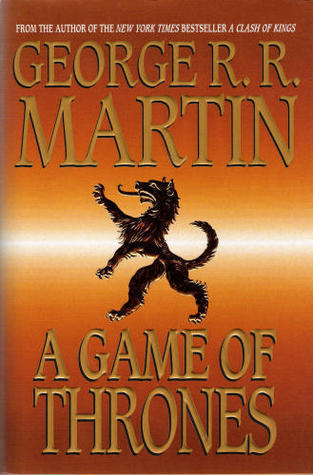
A Game of Thrones by George R. R. Martin
Book one of A Song of Ice and Fire
Bantam 1996
Locus Award for Best Fantasy Novel 1997, World Fantasy Award for Best Novel Nominee 1997, Nebula Award for Best Novel Nominee 1997
A


Summary from Goodreads: "Summers span decades. Winter can last a lifetime. And the struggle for the Iron Throne has begun.

As Warden of the north, Lord Eddard Stark counts it a curse when King Robert bestows on him the office of the Hand. His honour weighs him down at court where a true man does what he will, not what he must … and a dead enemy is a thing of beauty.

The old gods have no power in the south, Stark’s family is split and there is treachery at court. Worse, the vengeance-mad heir of the deposed Dragon King has grown to maturity in exile in the Free Cities. He claims the Iron Throne."

Spanning more than 800 pages and nearly a dozen POV characters, this first installment of Mr. Martin's epic can appear a bit daunting.  As one begins to wade through the tome, it can be difficult at first to keep track of the various characters and their factions, especially when there are several common names (Robert, Brandon, Jon) used for more than one character.  Due to this, it might be good to have some familiarity with the characters before reading, but it's not absolutely necessary.

There are three major plot threads in this first installment, all of which are left to be concluded in later volumes.  The main plot consists of Eddard Stark moving from his northern seat at Winterfell to the southern capital, where he becomes the chief advisor to his long-time friend King Robert.  Eddard becomes embroiled in a conspiracy when he uncovers information about Robert's wife and heirs and must ultimately choose whether to speak the truth and lose his position, or remain silent and lose his honor.  

The second plot thread involves the heirs of the deposed king, Viserys and Daenerys, who live in exile.  When Daenerys is wed to Khal Drogo, the leader of a Hun-like army, the two hope to travel back to Westeros and regain the throne stolen from them.  But the khal is slow to act, and a feud develops between him and Viserys.

Finally, in the far north, the dead have been coming back to life...

Even with its prodigious length, that's a lot to cram into one book, and yet it never reads like an info-dump.  Information is given carefully throughout the book, always incorporated organically in conversation.  The writing is realistic and straightforward; however, there is a sense of repetition with the writing.  It wouldn't suit the tale told here to have flowery writing, but perhaps a thesaurus would be a good investment for Mr. Martin.

The world-building and character development are definitely the strengths of the work.  While the regions and countries can be reconciled with those in our own world, the inclusion of dragons, dark magic, and the old gods give this tale of political maneuvering more flavor than an historical novel might have.  I've read that each new installment increases the amount of fantasy elements, so I'm interested to see how the elements already present are expanded.

With its emphasis on the history of Westeros, I'm reminded a bit of Tolkien, though there are no linguistic exercises here, and the tale is far grimmer, even without one ring to rule them all.  Winter is coming, after all.

Tuesday, August 6, 2013

Dream Factory: Fire and Ice

Fire and Ice
Director: Ralph Bakshi
Original release date: 20th Century Fox 1983
DVD release: Blue Underground Entertainment 2005
Streaming: Netflix
Rated PG
C-


Summary from Seen That: "In this animated tale, a tiny village is destroyed by a surging glacier, which serves as the deadly domain for the evil Ice Lord, Nekron. The only survivor is a young warrior, Larn, who vows to avenge this act of destruction. The evil continues, however, as Nekron's palace of ice heads straight towards Fire Keep, the great fortress ruled by the good King Jarol. When Jarol's beautiful daughter, Teegra, is abducted by Nekron's sub-human ape-like creatures, Larn begins a daring search for her. What results is a tense battle between good and evil, surrounded by the mystical elements of the ancient past."

The 80's were full of forgettable fantasy fare, and were it not for the ability to MST3K, Fire and Ice would probably be on that list.  It begins with an info dump attempting to convince the audience that the film will be far more epic than it actually is, then segues to a fight with Nekron, who seems to be having ice-gasms while fighting the tribe of warriors of which Larn is a member.  For me, it was the unintentional homoeroticism that made Fire and Ice enjoyable, so if you aren't amused by that sort of thing, you probably just want to avoid this film.

The rotoscoping is pretty decent, especially compared to Mr. Bakshi's Lord of the Rings, though there are some scenes where the footage seems to be deliberately slowed.  The costume "designs" are terribly lacking, with nearly every character parading around in loin cloths and string bikinis, even though the majority of the film takes place in the glacier where Nekron dwells.  I suppose we're meant to suspend our disbelief when no one dies from hypothermia.

The hero, Larn, is pretty lame.  Darkwolf (the dude with the ax in the above photo) is the one who actually fights and defeats Nekron.  Larn seems to only be included so that the audience has a young novice character to identify with, but Larn does nothing in this film but get into trouble.  Don't even get me started on Teegra.

In addition to the obvious wish fulfilment elements, the film is problematic in its name and design of Nekron's henchmen.  Rather than orcs or goblins, Nekron has "sub-humans," which have similar builds and facial structures to Alaskan Natives. I understand that this is a fantasy world, but I think the creators should have put much more thought into their portrayal of this particular group.  The best way would have been to create a fantasy race, but since they didn't, they could have at least given them a more suitable name and made them more intelligent.  The "sub-humans" here are basically depicted as Neanderthals who repeatedly try to kidnap and rape Teegra.  Yeah...it's pretty offensive.

All in all, unless you are looking for an unintentionally bad film to mock with your friends or are really interested in rotoscoping, I'd avoid Fire and Ice.


Friday, July 26, 2013

At the Theatre: The Little Mermaid

Recently, I had the opportunity to see a regional production of The Little Mermaid by the Pittsburgh Civic Light Opera.  While I had remembered the reviews of the Broadway production being fairly awful, the local newspapers here were raving about our production, which was in conjunction with Paper Mill Playhouse and Kansas City Starlight Theatre (where the show is finishing its run now).  Being both a Disney fan and a fairy tale reader, I decided to go and am quite glad I did.

Obviously, since this was the Disney version of the The Little Mermaid, it contained all of the songs from the 1989 film, as well as new ones penned by Alan Menken and Glenn Slater.  Ursula's backstory was considerably more fleshed out than it was in the film (here she is Triton's misfit older sister), although the plot thread involving her transformation into Vanessa and subsequent luring of Eric was removed, likely to keep the focus on Ariel.  Also, there was no epic fight scene at the climax, but given how difficult that would have been to stage, I'm not surprised.

Ariel is presented more as the black sheep of her family here, so her interest in all artifacts human and desire to leave the Merkingdom are more understandable.  Thankfully, Eric also gets some much needed character injected into him, becoming a reluctant king who is more comfortable living the sailor's life.

Of the new songs penned for the stage production, I most enjoyed Eric's solo, "Her Voice," and the lovely "If Only" sung in four overlapping parts by Ariel, Eric, Sebastian, and Triton.  Ursula's new song, "Daddy's Little Angel" was also somewhat entertaining.

While the swimming in the original Broadway production was portrayed with skates, this production implemented wire work and choreography to mimic the movements of creatures underwater.  I haven't seen the skate version, but just having read about it, it seems to me that the new production's idea worked better.
Although the singing contest could have been elaborated upon, and at my particular performance we had Ursula's understudy, it was a fun production for all ages with the proper amount of Disney spectacle.  I'd recommend going if anyone happens to be in Kansas City this week.


Thursday, July 18, 2013

Dream Factory: Valerie and Her Week of Wonders

Valerie and Her Week of Wonders
Directed by Jaromil Jires
Original release date: Barrandov Studios 1970 (Czechoslovakia)
US theatrical release: Janus Films 1974
US DVD release: Facets 2004
Streaming: Hulu
Not-rated
B+


Summary from Seen That: "Inspired by fairy-tales such as Alice in Wonderland and Little Red Riding Hood, Valerie and Her Week of Wonders is a surreal tale in which love, fear, sex, and religion merge into one fantastic world." 

Review: Since the above summary is especially vague, I'll do my best to do a short one myself.  

Valerie lives alone with her grandmother.  A troupe of actors has just arrived in her village, as has a missionary returning from Africa.  A hooded figure among the performers takes an interest in Valerie, though she learns he is a vampire.  A bespectacled youth named Eagle serves as her protector (along with a magic pair of earrings), as Valerie navigates the tricky path between childhood and adolescence, innocence and sexual awakening.

This film was recently available for free viewing on Hulu as part of their 101 Days of Criterion festival.  It sounded quirky, and I remember having read about it somewhere, so I decided to watch it.  And it delivered all the weirdness one could want.  

The film has a very surreal, dreamlike quality to it.  One is never quite sure what is real and what is imagined, and the characters frequently change their stories.  By the end of the film, the viewer (and Valerie) has been told at least three different iterations of Eagle's origin.  I did think the music used to alert viewers to certain repeating events became a bit gimmicky toward the end, but that was my only real complaint.

The actors here aren't professionals, as this film is part of the Czech New Wave of the late 60's/early 70's.  The leads weren't particularly emotive, but I may have just felt that way because tone doesn't always translate.  The missionary also had a really comic bedroom scene that amused me, though I don't know that it was intentional.

But what really stood out was the imagery.  This film is riddled with sexual imagery, from the obvious (a woman self-stimulating on a tree) to the more subtle (Valerie's entirely white bedroom).  I'm sure someone has to have analyzed every image by now, so I won't, but I think that's where this film really excelled.

I recently learned that this was based on a Czech novel by Vitezslav Nezval, which was only translated into English within the last decade.  I think I will have to read it for a comparison.

I feel like fans of Svankmajer would enjoy this the most.  But anyone with a penchant for the bizarre or the surreal should find something to enjoy.

Note: I scoured YouTube for a trailer, but I could only find fan-made ones.  Sorry.


Tuesday, July 16, 2013

Sara's Library: The Magicians

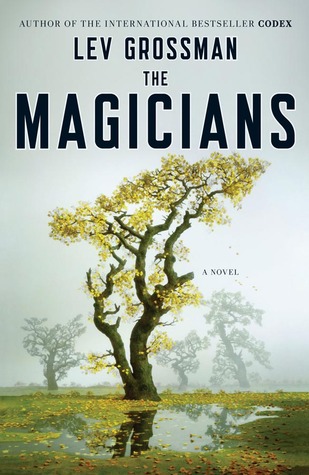
The Magicians by Lev Grossman
Book one of the Fillory trilogy
Viking 2009
A-

Summary from Goodreads: "Quentin Coldwater is brilliant but miserable. He's a senior in high school, and a certifiable genius, but he's still secretly obsessed with a series of fantasy novels he read as a kid, about the adventures of five children in a magical land called Fillory. Compared to that, anything in his real life just seems gray and colorless. 

"Everything changes when Quentin finds himself unexpectedly admitted to a very secret, very exclusive college of magic in upstate New York, where he receives a thorough and rigorous education in the practice of modern sorcery. He also discovers all the other things people learn in college: friendship, love, sex, booze, and boredom. But something is still missing. Magic doesn't bring Quentin the happiness and adventure he thought it would.

"Then, after graduation, he and his friends make a stunning discovery: Fillory is real."

Review:   There were so many times I wanted to simply give up on this novel and throw it at the nearest wall.  It's not that it's poorly written, far from it.  Quentin is just one of the most infuriating protagonists I have ever encountered.  He is extremely selfish, egotistical, and prone to moping when things don't go his way...and, ultimately, this is one of the reasons The Magicians works so well.

Quentin and the majority of his group (save Alice) are perfect examples of the high-achieving, middle-class students who are constantly told how "special" they are that they become self-absorbed misanthropes in their college years.  Quentin represents his generation.  Despite his cynicism, his disapproval of the failing system left to him by his elders, he holds on to his hope of something better, represented here by his belief in Fillory.

But rather than the whimsical, somewhat generic fantasy world he remembers from his beloved children's books, Quentin finds a Fillory ravaged by violence, a world antithetical to the one represented in the text of the books.  Again, Mr. Grossman brings life to a generation's frustrations and disappointments, this time by subverting children's fantasy.

While I'll be the first to admit that the book could be a slog due to Quentin's behavior, the writing and the thought behind it more than make up for an annoying protagonist.  I will definitely be reading The Magician King.