Friday, December 30, 2011

The Witch-queen of Swampsea


Chime
by Franny Billingsley
National Book Award finalist 2011

Set in turn-of-the-century England, Chime recounts the story of teenage Briony, a self-effacing girl who claims to be a witch. In the first few sentences of the novel, she claims also to be a murderer, blaming herself for the swamp sickness that has claimed the lives of numerous townspeople, as well as the death of her step-mother. Her twin sister, Rose, who appears to be autistic but is never described as such, is also a major cause of Briony's self-loathing, as the girl again blames herself for her sister's condition. Due to the great amount of self-hatred depicted, I a number of people at my book club had difficulty slogging through this book, but it definitely pays off in the end.

While this novel definitely has elements of fantasy with various swamp spirits playing key roles in the plot, it often doesn't read like a fantasy novel, leaving several of my colleagues confused as to whether Briony was hallucinating or actually experiencing the various events involving the spirits. This uncertainty is probably the only qualm I had with the book, overall. The prose is usually rather elegant, indicative of Briony's class and her love of writing, and the story blends fantastic elements with reality rather well. The love interest, Eldric, is quite likeable, as are Rose and Briony. But, despite all its positive factors, Chime just didn't stick with me. I may well read it again someday, but I found myself really having to cull through my memory just to write this short review, and I know a friend of mine felt the same way.

Of the finalists for the National Book Award, this and Okay for Now are definitely my preferred titles; however, none of the nominees really jumped out at me as titles that will become canonized. Time will tell, I suppose.

Grade: B+

Sunday, December 4, 2011

Luke Aaluk's School Days


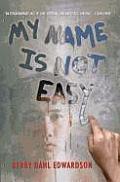
My Name Is Not Easy
by Debby Dahl Edwardson
National Book Award finalist 2011

In the 1960's, an Inupiaq (Eskimo) boy called Luke, whose real name is too difficult to for non-Inupiaq to pronounce, is sent to a Catholic boarding school, along with his two younger brothers, to complete his education. The majority of the students are other Inupiaq kids and kids from the Athabascan tribe, and the two groups do not get along. Speaking their tribal languages is forbidden, and the boys find it difficult to live under the guidelines imposed by the strict Catholic faculty.

While the subject matter is interesting, primarily because there is little fiction pertaining to Native Alaskan matters, and I certainly learned a decent amount about various real-life incidents like the Duck-In and iondine-131 testing among students, I found the writing to be distracting and a bit sloppy. At the beginning of each chapter, Ms. Edwardson would note the character upon whom the chapter would focus, but the POV for specific characters would shift throughout the book. For example, the majority of Luke-focused chapters would be written in first-person through his perspective; however, near the end of the book a clearly marked Luke chapter is written in third-person for no apparent reason. This happens with a few other characters, as well.

Also, since there's no over-arching plot, the book reads more like a series of school vignettes. Unfortunately, this has a negative effect upon readers' emotional connection to the characters, so when dramatic events take place, such events did not have the impact they might have had with a better writer.

My Name Is Not Easy is the second National Book Award finalist that I have had qualms about. It, and the previously reviewed Inside Out and Back Again both seem, to me at least, to have been nominated because of their diverse subject matter alone, and not because of the strength of their writing or expected longevity.

Grade: B-

Saturday, November 19, 2011

From Saigon to Alabama


Inside Out and Back Again
by Thanhha Lai
National Book Award 2011

In 1975, young Ha and her family are scraping by in Saigon, waiting for her father, a naval officer, to return. When the family learns that South Vietnam will soon fall to the communists, however, Ha's mother makes the difficult choice to flee. Crammed onto a boat with hundreds of other families, Ha and her family decide to go to America, where they are sponsored by a man in Alabama.

While the book is divided into thematic sections -- Saigon, the boat, and America -- the American section is definitely the longest and one of the more emotional sections, as Lai details Ha's attempts to fit in at school and in the community. Aside from a neighbor who happens to be a retired teacher who helps Ha with her English, there are few likeable American characters. It is unclear if this was intentional in order for readers to better sympathize with the Vietnamese protagonists or if it is factual, as Ms. Lai based a number of events on her own childhood in the South.

Given the subject matter, I had expected the book to be far more emotional. Perhaps it is because the verse prevents any major character depth or analysis, but I felt rather disconnected throughout its duration. I'm glad that there is a children's book about the fall of Saigon written through the POV of a Vietnamese child, but I feel like this book, at least, is more focused on America and assimilation. It's a worthy attempt, but it falls short.

Grade: B

Thursday, November 3, 2011

Mowgli Meets Dracula and the Wolfman


The Graveyard Book
by Neil Gaiman
Newbery Medal 2009, Carnegie Medal 2010

I first read this book back in October of 2009, long before I had this blog. Recently, I was assigned the audiobook version for a children's resources class, hence my post. While I will focus primarily on the plot and characters, I'd also like to speak a little of the book versus the audio version.

In the opening pages, the parents and sister of the main character (a baby boy) are murdered by the Man Jack, while the baby manages to escape to a nearby cemetery where he is promptly adopted by the Owenses, a married couple who died sometime in the 1800's. While the book chronicles the life of the boy (christened Nobody "Bod" Owens) through adolescence and his eventual confrontation with the Man Jack, the manner in which it is written is more akin to a series of vignettes than a traditional novel.

There have been complaints by some that the characters who populate the book, being ghosts, vampires, werewolves, etc., are inappropriate for the young readers at whom the novel is directed. However, it should be pointed out that these characters are all friends, teachers, and mentors to our young protagonist and that the entire work is also modeled upon The Jungle Books, in which a young boy is raised in the jungle by animals. Just as some animals intended Mowgli harm, but the majority looked after him, the majority of the supernatural characters here have Bod's best interests in mind.

As has come to be expected, Mr. Gaiman's writing is a brilliant marriage of Kipling's stories and characters with a modern setting and Mr. Gaiman's trademark wit. Regarding the audiobook, which is narrated by Mr. Gaiman, it has some nice additions, such as performances by Bela Fleck, and being read by the author himself provides perhaps the truest reading of the material. I personally prefer reading the book myself, however, as I found my attention wandering while listening to the audiobook for too long.

I read a year or two ago that a book focusing on Silas, Bod's mentor and the Bagheera character, was in the works, but I've not heard anything more about it. While I would certainly enjoy returning to Bod's world, this installment works perfectly on its own.

Grade: A

Monday, October 31, 2011

Two Transmedia Titles


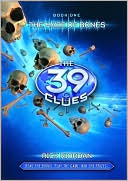
The Maze of Bones
by Rick Riordan

Similar to the set-up of The Westing Game, in which various people must solve a mystery in order to be chosen as the recipient of a fortune bequeathed in a will, here the members of the Cahill family are given the option of keeping $1,000,000 or forfeiting it in order to participate in the quest. Our protagonists, the orphan siblings Amy and Dan reluctantly decide to participate after deciding that their grandmother, the writer of the will, would have wanted them to do so.

The siblings soon find themselves the targets of their wealthy and powerful relatives, who all assume the kids have been given priviledged information by their grandmother before her death. Along with their au pair, they attempt to unravel the first clue before the others, which happens to center on Ben Franklin this volume.

While the first volume of The 39 Clues series provides entertaining fluff, the characters are all pretty static and stereotypical, from the Russian spy to the teen celebrity. Given that this is a corporate series with various authors, I expect that plot will remain more important than characterization for the duration.

The series has a website tie-in where kids can participate in the quest and solve clues, but a good deal of this is dependent upon the cards that come with the books (and are sold in additional packets). The books stand alone, and it really seems to me that this marketing ploy was an afterthought.

Grade: B-


Skeleton Creek
by Patrick Carman

In the first installment of the series, readers are introduced to high school students Ryan and Sarah, best friends whose parents have forbidden them from seeing each other after Ryan is injured while the two investigate a supposedly haunted mining dredge. Sarah becomes increasingly obsessed with the site, forming conspiracy theories about the town and its supposed secret societies. The two continue to communicate via e-mail and by the installment's end, Ryan and Sarah are investigating the site once again.

Presented as found evidence in the form of Ryan's journal, the best element of the series is the innovative use of video to tell the parts of the story from Sarah's perspective. The argument can be made that for the majority of the book it's not absolutely necessary to watch these clips, but the final scene is only available through the video component, so I recommend navigating between the text and videos as intended.

Again, the characters here are pretty flat. The mystery of the dredge is what drives the book forward, and the book would be pretty forgettable were it not for the video component.

Grade: C