Monday, June 1, 2015

Sara's Library: Ophelia and the Marvelous Boy

Ophelia and the Marvelous Boy by Karen Foxlee
Knopf 2014
Aurealis Award for Best Children's Fiction 2014 (nominee)
Grade: C


Summary from Goodreads: Unlikely heroine Ophelia Jane Worthington-Whittard doesn't believe in anything that can't be proven by science. She and her sister Alice are still grieving for their dead mother when their father takes a job in a strange museum in a city where it always snows. On her very first day in the museum Ophelia discovers a boy locked away in a long forgotten room. He is a prisoner of Her Majesty the Snow Queen. And he has been waiting for Ophelia's help.

As Ophelia embarks on an incredible journey to rescue the boy, everything that she believes will be tested. Along the way she learns more and more about the boy's own remarkable journey to reach her and save the world.


When I first read the synopsis of the book, I was very excited for this Snow Queen story.  A skeptical girl, a boy-out-of-time,  a mysterious museum, and the Snow Queen?  Yes, please!

Unfortunately, the parts don't quite fit together, resulting in what I found to be a rather disappointing read.  The only element of Mr. Andersen's classic fairy tale that remains is the Snow Queen herself, in the form of the museum curator, Miss Kaminski.  There is no troll, no mirror, and no female companion to help Ophelia with her quest.  Ms. Foxlee has taken only the most basic elements of the original tale and uses those elements (the ice palace and the queen) rather poorly.  Miss Kaminski reads more like a slightly more sinister version of Rocky and Bullwinkle's Natasha than a truly threatening villain.  Most of her scenes involve her trying to seduce Ophelia's recently widowed father or manipulating Ophelia's sister.  Her only truly evil act is her use of a soul-sucking machine on young girls (including the aforementioned sister).  

With the exception of the villain, the adults are portrayed as oblivious and unhelpful, which seems to be a common trend in modern children's literature.  Even Ophelia's adolescent sister does her best to channel Susan Pevensie and ignore Ophelia until it's nearly too late.  It would have been refreshing to have helpful adults in such a book for once.

As for Ophelia herself, she's very stodgy.  There is healthy skepticism, and then there is Ophelia's refusal to believe in magic when it is staring her in the face.  She's a rather flat character and, unfortunately, most of her characteristics are taken from the nerd stereotype: glasses, asthma (constantly using her "puffer"), extremely rational.  Had Ms. Foxlee done something to develop her character beyond these traits, Ophelia may have become likable, but as written, she's just annoying.

The titular Marvelous Boy and the passages narrating his capture by Miss Kaminski are the only sections of the novel that feel like the belong to a fairy tale.  The writing there has more character and less didacticism than that of the main narrative, and perhaps even a hint of whimsy.  If more of the book had followed the example of the Marvelous Boy, it would have been considerably better.

As it was, despite being fairly short in length, it felt much longer, except for the end, which was extremely anticlimactic.  I'm truly curious how this novel was nominated for any major fantasy awards, as there were definitely better middle grade fantasies in 2014.  I would not recommend this novel.

Saturday, May 16, 2015

Dream Factory: Galavant

Galavant
Original airdate: January 2015
Original US broadcaster: ABC
Episode total: 8
Availability: Streaming on Hulu
Grade: C+


Summary from Rotten Tomatoes: "A medieval hero fights to win back the love of his life, Madalena, from the evil king who stole her in this musical comedy."

At a length of only eight episodes, Galavant manages to cover a significant amount of plot with numerous twists along the way.  Within the first two or three episodes, the synopsis from Rotten Tomatoes and IMDB has been discarded, as Galavant shifts his focus to helping Isabella, the princess of Valencia, rescue her parents from King Richard, who has overthrown the kingdom along with his new bride, Madalena.  Add numerous side plots, ranging from land pirates to an adorable relationship between Richard's cook and Madalena's handmaid, and there's almost too much stuffed into each 22 minute episode.

Despite the pedigree of the show's composer, Alan Menken, the majority of the tunes are woefully forgettable with a few exceptions (the title song, which is reprised so many times it's impossible to forget,  and a riff on Sweeney Todd's human pies sung by the cook and maidservant).  I don't believe it's Mr. Menken's fault, however.  It's the format that's damaging.  Stuffing 3 or 4 songs into 22 minutes seldom works for children's shows, let alone adult fare, and here many of the songs fall flat.  While the writing on Smash may not have been the best, nearly every song on the show had a purpose, which is something that cannot be said of the songs on Galavant.  Perhaps in its second season it will expand into an hour-long format and combat this problem.

My other qualm with the show was its plethora of potshots and cheap jokes.  Given its renewal and vocal fanbase, I'm apparently in the minority, but I was expecting witty dialogue, puns, and wordplay for some reason, not sex jokes and stereotypes (see the episode where the group visits the squire's Jewish village for reference).

Regardless of the issues I had with the show, I am glad to see something on US TV that's at least trying to break the mold, even if it's not entirely successful.  Here's hoping season two is better. 


Monday, January 19, 2015

Dream Factory: Into the Woods

Into the Woods
Director: Rob Marshall
Original release date: Disney 2014
Golden Globe Award for Best Motion Picture - Musical or Comedy 2015 nominee
Rating: PG
Grade: B


Summary from Rotten Tomatoes: Into the Woods is a modern twist on several of the beloved Brothers Grimm fairy tales, intertwining the plots of a few choice stories and exploring the consequences of the characters' wishes and quests. This humorous and heartfelt musical follows the classic tales of Cinderella, Little Red Riding Hood, Jack and the Beanstalk, and Rapunzel -all tied together by an original story involving a baker and his wife, their wish to begin a family and their interaction with the witch who has put a curse on them.

As an aficionado of both fairy tales and musicals, I had been anticipating the release of the film version of Into the Woods for some time, especially since it's an adaptation of a Stephen Sondheim musical.  Of course, I knew that there would be changes since Disney was marketing it as a family film, but there were still more than I expected.

A number of songs have been truncated or excised completely to shorten the length of the show, which I feel is to its detriment.  Some of the songs that were removed included "Ever After" and "No More,"  which both appear only as instrumentals.  The reprise of "Agony" has also been removed and with it the subplot of the Princes' respective affairs with Snow White and Sleeping Beauty.  I suppose it was to be expected that the "adult" subject matter would be removed or significantly toned down given Disney's involvement, but it muddled the plot in regard to Cinderella's decision to leave her prince.  It should be noted that the violence has been altered, as well.

I appreciated that this version of Cinderella's story used her dead mother's spirit instead of the fairy godmother that has become so iconic. I had worried that it would be changed for the film.  It's worth noting that Rapunzel's prince is still blinded, but Rapunzel neither bears a child nor dies in this version.  

As for production values, the costumes and sets are all fairly detailed and the effects, such as the bean stalks and the Witch's transformation, are pretty impressive.  There's also a good mix of celebrities and stage performers who all do a good job performing the songs.  I don't think Meryl Streep deserves awards nominations for her role here, but considering the shoes she had to fill, I still enjoyed her performance.  

All in all, Into the Woods is a good film that may serve as a great introduction to Sondheim.  It can't replace a live performance, however.

Monday, January 12, 2015

Sara's Library: The Alchemist

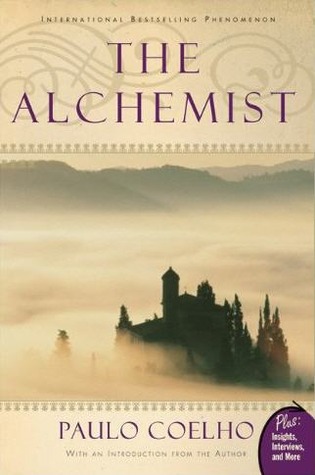
The Alchemist by Paulo Coehlo
Original Brazilian edition: Rocco 1988
First US edition: Harper Collins 1993
Translated from Portuguese by Alan R. Clarke
Grade: C-


Summary from Goodreads: This story, dazzling in its powerful simplicity and inspiring wisdom, is about an Andalusian shepherd boy named Santiago who travels from his homeland in Spain to the Egyptian desert in search of a treasure buried in the Pyramids. Along the way he meets a Gypsy woman, a man who calls himself king, and an alchemist, all of whom point Santiago in the direction of his quest. No one knows what the treasure is, or if Santiago will be able to surmount the obstacles along the way. But what starts out as a journey to find worldly goods turns into a discovery of the treasure found within. Lush, evocative, and deeply humane, the story of Santiago is an eternal testament to the transforming power of our dreams and the importance of listening to our hearts.

I've seen The Alchemist on various suggested reading lists for a number of years and finally decided to read it.  While the work is incredibly short, and thus I didn't spend too much of my time reading it, I still want that time back.  To me, this is one of the most over-hyped books I have ever read.

Essentially, this is a reworking of "The Man Who Became Rich Again Through a Dream" from The Arabian Nights.  The difference is that the details are fleshed out with a lot of pseudo-philosophical, pseudo-spiritual nonsense meant to inspire the reader to follow his dreams like the Shepherd.   While the style is meant to emulate the sparse style of folktales, Mr. Coelho didn't enrich the original tale with some new insight previously missing from prior incarnations, but instead muddled it.  The characters are flat, serving only to spout maudlin dreck found in the types of self-help books endorsed by reality TV stars, and the prose itself is only serviceable, though this may be a translation issue.

I cannot recommend this book.  All I can do is hope that my thoughts on it prevent someone else from wasting time.

Tuesday, January 6, 2015

Sara's Library: The Young Elites

The Young Elites by Marie Lu
Book one of The Young Elites trilogy
Putnam 2014
Grade: A


Summary from Goodreads: Adelina Amouteru is a survivor of the blood fever. A decade ago, the deadly illness swept through her nation. Most of the infected perished, while many of the children who survived were left with strange markings. Adelina’s black hair turned silver, her lashes went pale, and now she has only a jagged scar where her left eye once was. Her cruel father believes she is a malfetto, an abomination, ruining their family’s good name and standing in the way of their fortune. But some of the fever’s survivors are rumored to possess more than just scars—they are believed to have mysterious and powerful gifts, and though their identities remain secret, they have come to be called the Young Elites.

Teren Santoro works for the king. As Leader of the Inquisition Axis, it is his job to seek out the Young Elites, to destroy them before they destroy the nation. He believes the Young Elites to be dangerous and vengeful, but it’s Teren who may possess the darkest secret of all. 

Enzo Valenciano is a member of the Dagger Society. This secret sect of Young Elites seeks out others like them before the Inquisition Axis can. But when the Daggers find Adelina, they discover someone with powers like they’ve never seen. 

Adelina wants to believe Enzo is on her side, and that Teren is the true enemy. But the lives of these three will collide in unexpected ways, as each fights a very different and personal battle. But of one thing they are all certain: Adelina has abilities that shouldn’t belong in this world. A vengeful blackness in her heart. And a desire to destroy all who dare to cross her.

What an incredibly long book-jacket summary!  To summarize in one sentence: X-Men meets the Inquisition.  If that doesn't sell you on this book, I'm not sure what will!

I had previously read Ms. Lu's Legend trilogy, so when I first learned she was planning to write a fantasy novel, I immediately added it to my to-read list.  As in her previous work, the chapters are written from one of three perspectives: Adelina, Teren, or Enzo.  The majority of the chapters come from Adelina's perspective, which is somewhat detrimental as it leads to less nuanced characterization for the other players.  While the secondary characters are less well-rounded than I would have liked, I believe the intent here was to present a character study of Adelina, and in that way, the novel is incredibly successful.

Adelina is not meant to be a likable protagonist.  She second guesses everyone's intentions toward her (rightfully so, as we learn!), envies her sister's normality, and has such little control over her powers that she frequently endangers the other Elites.  Her only redeeming quality seems to be her love for her sister, although this is used against her throughout the first installment.  But it is precisely because she is a flawed character that The Young Elites is such a compelling read.  We've already read about the perfect girl-next-door type dozens of times, so it's refreshing to read about a girl with so much self-doubt that it actually fuels her power.

X-Men fans will likely notice character similarities here.  Enzo as Magneto, Raffaele as Xavier, Teren as Jason Stryker, and Adelina as Mystique (especially as depicted in the recent films).  Even with these similarities in mind, the ending came as a surprise for me.  I applaud the book for that alone, as it's usually so easy to predict the outcome in YA novels.

I highly recommend this book to any fans of fantasy and cannot wait for The Rose Society to be released!

Tuesday, November 11, 2014

Sara's Library: Splintered

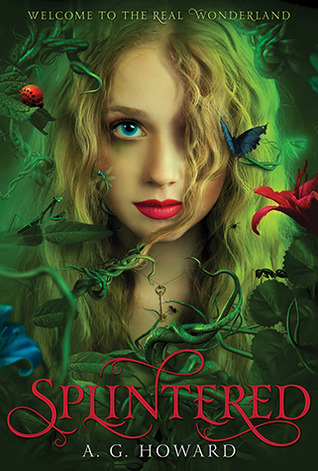
Splintered by A.G. Howard
Amulet Books 2013
YALSA Teens' Top 10 2014
B


Summary from Goodreads: Alyssa Gardner hears the whispers of bugs and flowers—precisely the affliction that landed her mother in a mental hospital years before. This family curse stretches back to her ancestor Alice Liddell, the real-life inspiration for Lewis Carroll’s Alice’s Adventures in Wonderland. Alyssa might be crazy, but she manages to keep it together. For now.

When her mother’s mental health takes a turn for the worse, Alyssa learns that what she thought was fiction is based in terrifying reality. The real Wonderland is a place far darker and more twisted than Lewis Carroll ever let on. There, Alyssa must pass a series of tests, including draining an ocean of Alice’s tears, waking the slumbering tea party, and subduing a vicious bandersnatch, to fix Alice’s mistakes and save her family. She must also decide whom to trust: Jeb, her gorgeous best friend and secret crush, or the sexy but suspicious Morpheus, her guide through Wonderland, who may have dark motives of his own.

This book is everything that Tim Burton's Alice in Wonderland wanted to be.  The Wonderland Ms. Howard creates is a darkly haunting place, where all of Lewis Carroll's creations have been transformed into maniacal and murderous creatures that cannot be trusted.  Gone entirely is the sense of whimsy seen in the original books and the Disney adaptation, as well as any sense of satire.  As such, purists may not care for this "sequel" of sorts, but it does have its merits.

This novel's greatest strength is the amount of intricate detail that Ms. Howard puts into everything from the scenery to the clothes that the characters wear.  As someone who is not particularly visual, I appreciate when writers have a distinct vision of their world and painstakingly describe it to their readers.  However, some might argue that too much focus is put on these details and not enough focus is given to the characters themselves.

I would probably agree that, creative and altruistic Alyssa aside, the main characters are one's standard YA fantasy tropes: the bad boy (Morpheus) and the stalwart friend-turned-lover (Jeb).  I found both of these love interests to be problematic, albeit for different reasons.  Morpheus manipulates Alyssa for nearly the entirety of the novel and is known to be quite the womanizer.  Jeb, on the other hand, while loyal, often treats Alyssa like a kid sister and doesn't respect her autonomy.  While teenage readers will likely swoon for both of them, Alyssa (and the readers) deserve better.

As publishers are wont to do these days, two more books have been written to form a trilogy.  However, Splintered resolves itself pretty neatly, and I'm content to leave the characters as they are, rather than leave myself to the possibility of disappointment with another superfluous sequel.


Saturday, September 13, 2014

Sara's Library: Mort

Mort by Terry Pratchett
Book four in the Discworld universe
Victor Gollancz 1987
B+


Summary from Goodreads: In this Discworld installment, Death comes to Mort with an offer he can't refuse -- especially since being, well, dead isn't compulsory.  As Death's apprentice, he'll have free board and lodging, use of the company horse, and he won't need time off for family funerals. The position is everything Mort thought he'd ever wanted, until he discovers that this perfect job can be a killer on his love life.

I'm not a very funny person.  My humor tends toward dry wit and pop culture references, and most attempts others make at comedy tend to fall flat when performed or shown to me.  It's not surprising then that the first time I read Mort, I saw nothing more than a pleasant diversion.  I recently reread it (aloud to my husband), and I enjoyed it much more when spoken.  So much of humor relies upon delivery that I think silently reading prose to oneself automatically inhibits the humor, but perhaps that's just me.

The plot is delightfully absurd.  After being apprenticed to Death, Mort botches one of his first jobs by letting a beautiful princess live.  In the days that follow, two timelines begin to converge, and Mort must come up with a plan to reset reality.  Meanwhile, Death tries his hand at various other occupations, forgetting he is essentially a cosmic force that cannot be replaced, regardless of who he might train for the job.

While I don't know if I'll invest any time in reading other Discworld novels, Mort is an enjoyable stand-alone story that should appeal to fantasy readers of all ages.

Saturday, July 26, 2014

Dream Factory: How to Train Your Dragon 2

How to Train Your Dragon 2
Director: Dean DeBlois
Original release date: DreamWorks Pictures 2014
Rating: PG
A

Summary from IMDB: When Hiccup and Toothless discover an ice cave that is home to hundreds of new wild dragons and the mysterious Dragon Rider, the two friends find themselves at the center of a battle to protect the peace.


Five years have past since the events that transpired in the first film.  As the story begins, Stoick is grooming Hiccup to replace him as chief of the village, but Hiccup focuses instead on traveling with Toothless to create an expanded map of the area.  He has also been tinkering with a set of wings for himself, although each practice attempt has resulted in a crash landing thus far. 

On one of their journeys, the duo encounters dragon poachers, but are rescued by a mysterious masked dragon rider.  Once Hiccup learns more about the poachers, he must rally his friends before the poachers capture all of Berk's dragons.

Those who are fans of the first film shouldn't be disappointed with this installment.  While the film has a number of serious moments, the trademark humor is still present in the side characters, such as Ruffnut and Fishlegs.  And the animation quality has only been improved since 2010.

What I most appreciated was the attention dedicated to a major secondary character's death.  Many family-oriented films will skim over such death sequences, but the writers here respect their audience and the scene they've created.  The scene in question is one of the most emotional in either of the films, not only because of the death, but because of how the death affects the relationship between Hiccup and Toothless.  Even though attentive viewers will see the foreshadowing of the death in earlier scenes in the film, it still stirs the emotions, which is a sign of how strong the writing is here.

My only real complaint with the film is that Hiccup is the only character who is given time to develop over the course of the film.  Astrid and his friends are very much side characters here, and the relationship between Hiccup and Astrid seems tacked on.  I haven't watched the TV show, so maybe it was developed more there?  If not, I hope the next film allots some time for other characters to mature and change.

I'm not sure why this film hasn't been doing better at the box office, as it's a solid, well-animated installment.  Fans of the franchise and of animation in general should definitely see it at the cinema.

Saturday, July 12, 2014

Sara's Library: Hollow City

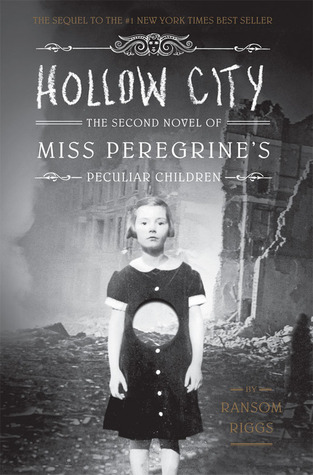
Hollow City by Ransom Riggs
Book two of the Peculiar Children series
Quirk Books 2014
B-


Summary from Goodreads: Miss Peregrine's Home For Peculiar Children was the surprise best seller of 2011—an unprecedented mix of YA fantasy and vintage photography that enthralled readers and critics alike.

This second novel begins in 1940, immediately after the first book ended. Having escaped Miss Peregrine's island by the skin of their teeth, Jacob and his new friends must journey to London, the peculiar capital of the world. Along the way, they encounter new allies, a menagerie of peculiar animals, and other unexpected surprises.

Complete with dozens of newly discovered (and thoroughly mesmerizing) vintage photographs, this new adventure will delight readers of all ages.

This installment picks up at the exact point where the previous one ended: the Peculiars and Miss Peregrine (trapped in bird form) row away from their island.  It doesn't take long before the Hollows are reintroduced and our heroes are on the run, not only searching for safety but for another ymbryne who may be able to reverse Miss Peregrine's avian state.  With only three days to find a solution or risk losing Miss Peregrine's humanity, this second volume keeps up a rollicking pace for its duration.

One of my chief complaints with the first book was that, Jacob aside, there was little character development.  The majority of the characters fit neatly into an archetype, usually influenced by their power, and were paper thin.  I'm sad to say that there's not much more attention paid to characterization this time around.  It's very much a plot-driven installment, so if you're not interested in mutant kids fighting monsters in the 1940's, this book is not for you.

That being said, it is an entertaining diversion, and I enjoyed the world building through the peculiar animals and the fairy tales.  The photographs didn't seem to enhance the story this time and felt shoehorned in, almost gimmicky.  I'm curious to see how Mr. Riggs uses the photographs in the next volume and hope it will be more like those in the first book.


Monday, July 7, 2014

Dream Factory: Maleficent

Maleficent
Director: Robert Stromberg
Original release date: Walt Disney Pictures 2014 
Rating: PG
B

Summary from Rotten Tomatoes: Maleficent explores the untold story of Disney's most iconic villain from the classic Sleeping Beauty and the elements of her betrayal that ultimately turn her pure heart to stone. Driven by revenge and a fierce desire to protect the moors over which she presides, Maleficent cruelly places an irrevocable curse upon the human king's newborn infant Aurora. As the child grows, Aurora is caught in the middle of the seething conflict between the forest kingdom she has grown to love and the human kingdom that holds her legacy. Maleficent realizes that Aurora may hold the key to peace in the land and is forced to take drastic actions that will change both worlds forever.


As both a fan of fairy tales and Disney villains, I was excited when Maleficent was first announced a few years ago, albeit apprehensive given the last few live-action films released by Disney.  And while the critics have given mostly mixed reviews to Maleficent, I thought there were some great elements in it that just needed to be elaborated upon.

One of my major concerns, other than the story itself, was the special effects.  In recent years, there has been an increasingly apparent shift away from practical effects towards CG ones.  Sometimes those CG effects blend seamlessly with the live-action shots, while more frequently they are obvious and seem hollow.  The effects here are somewhere in the middle ground.  They're not perfect, but they're also not shoddy.  Being a practical effects enthusiast, I would have preferred to see the faerie realm as depicted by Jim Henson's Creature Shop, but considering that the majority of creatures were CG, they still managed to convey themselves as creatures with souls.

Fans of Eleanor Audley's portrayal may be a bit disappointed, as Angelina Jolie creates her own interpretation of the character for the most part.  The only Audley-esque scene is the christening of Aurora, which replicates much of the dialogue from the 1959 film.  Those expecting a rehash of the animated film from Maleficent's perspective will be surprised, as much of the latter half of the film is completely different, rather than just presented from a different viewpoint.

Some things worked well, while others did not, though at the risk of spoiling things for those who haven't seen the film, I won't elaborate.  Maleficent's motivation for revenge was justified, but in her rage, she harmed those who were innocent of the betrayal.  I thought this was portrayed very realistically and greatly enjoyed Maleficent's quest for redemption through her role as "fairy godmother."  Both she and Aurora were much more complex characters here than in the 1959 film, while the three "good fairies" were relegated to the role of comic relief.

While I applaud the attempt at not only introducing feminist themes to the work, but also the parallelism of the sleeping victims (Maleficent and Aurora), I found some of the narrative problematic.  Namely, the lack of positive male characters.  It's important that when empowering female characters, we don't villainize the male ones, but that's what happened here.  I'm not trying to excuse the actions of Stefan, as they were abhorrent.  I'm just pointing out that the film would have been more balanced if there were a good male to balance out Stefan's evil.  I think they attempted that with Philip (attempted being the operative word), but he's barely in the film so he doesn't do much to counteract Stefan.  I should note that I'm also not calling for Philip (or another male) to be the hero.  Aurora and Maleficent do a fine job of thwarting the king themselves.  I just want balance in the portrayals of characters of both sexes.

All in all, an enjoyable attempt to retell a classic fairy tale from a different perspective, even if it has its flaws.


Sunday, June 29, 2014

Sara's Library: The Precious Stone Trilogy

The Precious Stone trilogy by Kersten Gier
Consisting of: Ruby Red, Sapphire Blue, and Emerald Green
Original German editions: Arena Verlag 2009 (books 1 & 2), 2010 (book 3)
US edition: Henry Holt 2011 (book 1), 2012 (book 2), 2013 (book 3)
Translated from German by Anthea Bell
C


Summary of Ruby Red from Goodreads: Gwyneth Shepherd's sophisticated, beautiful cousin Charlotte has been prepared her entire life for traveling through time. But unexpectedly, it is Gwyneth, who in the middle of class takes a sudden spin to a different era!
Gwyneth must now unearth the mystery of why her mother would lie about her birth date to ward off suspicion about her ability, brush up on her history, and work with Gideon--the time traveler from a similarly gifted family that passes the gene through its male line, and whose presence becomes, in time, less insufferable and more essential. Together, Gwyneth and Gideon journey through time to discover who, in the 18th century and in contemporary London, they can trust.
When every-girl Gwyneth discovers she carries the rare time travel gene, rather than her perfect cousin, she's confused and uncertain what to do.  While Charlotte has been studying foreign languages, history, dance, and etiquette, Gwyneth has spent most of her leisure time watching romantic comedies with her best friend.  As such, the secret organization that has been overseeing such time travelers for centuries is less than confident in her abilities.
Ms. Gier writes a fluffy, plot-driven series of novels that will appeal to teen girls, even those who normally stay clear of genre fiction.  Although there is a talking gargoyle and discussions of alchemy and the philosopher's stone, the series is, at its heart, a romance, albeit it a sloppy one involving insta-love.  While the story is spread across three novels, the plot takes place over the course of a week, so it is rather unbelievable when Gideon professes his love for Gwyneth, even taking into account the perils they survive together in the past.
Gwyneth herself is likable enough, but she's primarily a stand-in for the reader.  What she manages to accomplish is all thanks to her best friend, Lesley, the gargoyle, and a ghost who haunts her private school, the latter two visible thanks to a handy ability to see and speak with spirits.  Everything that happens just seems entirely too convenient, and there's no character development to speak of.  Over the course of three novels, that's unacceptable.

If one is looking for a featherweight romantic fantasy, this might make a nice choice.  But anyone searching for something beyond a few hours of entertainment should look elsewhere.


Monday, June 9, 2014

Dream Factory: Once Upon a Time in Wonderland

Once Upon a Time in Wonderland
Original airdate: October 2013 - April 2014
Original US broadcaster: ABC
Episode total: 13
TV PG
Availability: No DVD release date announced, episodes available for download purchase through Amazon
D+

Summary from Rotten Tomatoes: "In the first and only season of this spin-off from Once Upon a Time, a young Victorian Englishwoman named Alice (Sophie Lowe) is taken to an asylum after sharing fanciful tales of a magical world on the other side of a rabbit hole. Just before she's about to have an operation to make her forget about these tales, the Knave of Hearts (Michael Socha) saves her and transports her back to Wonderland. Upon returning, she tries to reunite with Cyrus (Peter Gadiot), the genie with whom she fell in love. But the reunion is not easy, because Wonderland is populated with its share of villains, including Jafar (Naveen Andrews) and the Red Queen (Emma Rigby)."

The summary alone should indicate that this show was a bit of a trainwreck and suffered from many of the same issues as Tim Burton's 2010 Alice film: the writers seemed to have no knowledge (or respect) for the original work.  Wonderland became a generic fantasy world where its bizarre flora and fauna were frequently treated as threats to our maudlin protagonists.  Merging the Wonderland characters with Agrabah and Jafar only confused the writing more.  It's still unclear to me why the writers chose to combine these stories to create one convoluted plotline.  If they had focused instead on making a Wonderland heavily rooted in the work of Lewis Carroll, perhaps it would have fared better.

The CG for this show, which is used in the sets and any non-human characters, was some of the worst CG on television.  Instead of creating a unique world that the audience would want to visit, its quality was so hokey that it was laughable.  It was the CG equivalent of visible wires.  If a show doesn't have the budget to use good CG effects, then I'd much rather have constructed sets and puppets.  Well-made sets and props will age much better than low-budget CG.

Unfortunately for the show, the CG quality was the least of its problems.  In addition to distractingly bad hairstyling (at least in the first few episodes), the writing was lackluster.  The romance between Alice and Cyrus was disgustingly saccharine for no apparent reason.  They made Snow and Charming seem like a normal couple, which is saying a lot.  I understand that the producers likely thought that a romance would induce viewers to keep watching, but I found it to be superfluous and completely unrelated to the original work.  It was obviously shoehorned in, as was the relationship between the Knave and the Red Queen. 

That being said, the Knave was one of the only likeable characters on the show, with the other being Jafar.  I'm not sure why the Once writers have such difficulty writing believable good characters, but it's only the villains and neutral characters that seem to have any depth.

To be honest, I kept watching each week with the hope that things would improve, but instead I found myself MST3king each episode.  It was the worst show I watched this year, and I'm glad that it was canceled so I don't have to find time for it each week next season.  

Sunday, May 11, 2014

Sara's Library: Rump: The True Story of Rumpelstiltskin

Rump: The True Story of Rumpelstiltskin by Liesl Shurtliff
Knopf 2013
C+


Summary from Goodreads: "In a magic kingdom where your name is your destiny, 12-year-old Rump is the butt of everyone's joke. But when he finds an old spinning wheel, his luck seems to change. Rump discovers he has a gift for spinning straw into gold. His best friend, Red, warns him that magic is dangerous, and she’s right. With each thread he spins, he weaves himself deeper into a curse.

"To break the spell, Rump must go on a perilous quest, fighting off pixies, trolls, poison apples, and a wickedly foolish queen. The odds are against him, but with courage and friendship—and a cheeky sense of humor—he just might triumph in the end."


Another entry into the crowded reimagined fairy tale villain pool, Rump: The True Story of Rumpelstiltskin introduces readers to an orphan boy with an unfortunate name who happens to be able to spin straw into gold.  This is a far cry from the Grimms' version, or even the fan favorite Rumpel from Once Upon a Time.  This Rump knows next to nothing about magic, where he came from, how he came to have powers, or how to use them.  And yes, this makes up the backbone of plot development.  Because he knows so little about his special skill, he accidentally makes a bargain with the queen for her firstborn child, then spends the remainder of the book trying to undo said bargain.

Ms. Shurtliff writes an appealing protagonist, although her writing is not quite ready for primetime.  The majority of the book is marked by telling, though given the conversational style in which the book is written, perhaps this was intentional.  The only character with any dimension is Rump himself with everyone else existing only to further the plot, whether it be for good (Rump's aunt) or ill (the miserly miller). Despite its flaws, it is still an enjoyable, if a simplistic, read.

One thing Ms. Shurtliff does well is concoct new stories for familiar mythological creatures.  In her world, trolls are friendly, magic-sensing creatures and pixies attack like hornets if gold is nearby.  While those with knowledge of German may be annoyed with her erroneous etymology for rumpelstiltskin, the majority of readers will enjoy the new spin given to the character.

While it's not the most innovative or best written fairy tale retelling around, Rump: The True Story of Rumpelstiltskin is sure to please young fantasy readers in search of a quick, enjoyable read.


Friday, February 14, 2014

Sara's Library: The Fire Chronicle

The Fire Chronicle by John Stephens
Book two of The Books of Beginning trilogy
Knopf 2012
C+

Summary from Goodreads: "It's been six months since Kate, Michael and Emma confronted the Dire Magnus, but the trail to their long-lost family remains cold. Then Michael and Emma find the man who was the last person to see them. He knows about a secret map of a distant, mysterious land - maybe this is the clue that will lead them to their parents...

"Meanwhile, Kate's connection to the Book of Time grows ever stronger, and when a dangerous trick traps her in the past, she must find new friends to help her return home. 

"Once more the children must embark on a daring and perilous quest to find the second Book of Beginning and harness its power. But will it be enough to save them all?"


Some readers may remember my enthusiastic review of the first installment of the series.  While that volume had some minor issues with genre tropes, it was a fast-paced entertaining ride that somehow felt genuine, rather than something cobbled together from better elements of fantasy literature.  Not so with The Fire Chronicle.  

I don't have a perfect memory of the last volume, but I thought Mr. Stephens's writing regressed here.  Telling comprised at least two-thirds of the book, rather than showing.  I realize this is a children's novel, but children are intelligent and intuitive.  They don't need the author to constantly reiterate the characters' feelings.  
This installment also read like every successful fantasy element was thrown into a blender in an attempt to sell books.  In addition to the time travel introduced previously, elves, dragons, an evil immortal wizard (a.k.a. Voldemort), and a book with the power to heal were all included, as well as the cast of Oliver Twist and an unnecessary star-crossed love interest for Kate.  I feel like Mr. Stephens should have chosen the most important elements and left out the rest because this really has an everything-but-the-kitchen-sink feeling to it.  I found it all to be rather disappointing, especially after the first book.

So what was good about book two?  Due to events that lead the three siblings to be separated, there's some decent character development, primarily with middle child Michael.  While he retains his geeky traits, he also matures and shows himself to be a confident, caring brother when given the opportunity.  For the most part, Kate is still the maternal figure and Emma is the loose cannon.  I think it's doubtful that this will be remedied in the final book, but at least there was some effort with Michael here.

Will I read The Black Reckoning?  Of course.  I've invested a decent amount of time into this series, and I'd like to see how it resolves itself.  That being said, it will not be with the same feelings of anticipation I  had after finishing The Emerald Atlas.  What once had great potential has become something merely mediocre.


Saturday, November 30, 2013

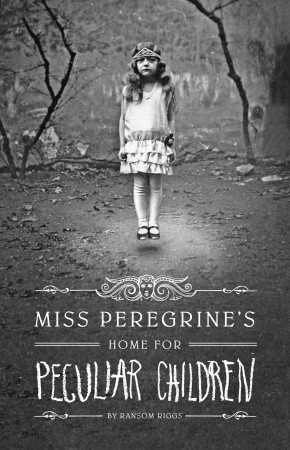
Sara's Library: Miss Peregrine's Home for Peculiar Children

Miss Peregrine's Home for Peculiar Children by Ransom Riggs
Quirk Books 2011
B


Summary from Goodreads: "A horrific family tragedy sends Jacob, 16, to a remote island off Wales, to the crumbling ruins of Miss Peregrine's Home for Peculiar Children, where he finds unusual old photographs. The children, one his grandfather, were more than peculiar, perhaps dangerous, quarantined for good reason - and maybe still alive."

I had expected this novel, which includes a number of strange, antique photographs, to read more like one of Brian Selznick's hybrid novels.  However, rather than using the photographs to propel the story forward as the illustrations in Mr. Selznick's novels do, here the photos simply serve to enrich the prose descriptions of the peculiar children and to legitimize the narrative as "true."  While some of the photographs were delightfully creepy and really did add to the narrative, I'd like to see the next installment come closer to being a hybrid.  

The novel moves along at a fairly fast pace, dividing its time between the present and the WWII era past of the peculiar children, which is a continuous loop of the day the home is bombed.  With the pacing as it was, there was little time devoted to character development, which was the biggest disappointment of the book.  Most of the peculiars are archetypes (the brain, the brawn, the dreamgirl) and more seems to be made of their peculiar abilities than of their personalities or histories.  As such, I found it difficult to become invested in the characters themselves, even the protagonist Jacob, who is a more relaxed version of the average shounen anime hero.  

That being said, the idea of combining the plot  X-Men with that of Bleach was an interesting one, as I'm sure many of us have often wondered what it would be like if mutants fought against supernatural monsters.  This first volume is executed well, despite its thin characterization, which will hopefully be improved upon in the next volume.

Saturday, November 16, 2013

Once Upon a Time..For King and Country

Once Upon a Time Season 3 Episode 5: "Good Form"
In the fairyback, we are introduced to Lt. Killian Jones, a member of some nation's navy, and his brother Liam, the captain.  They are under orders to set sail for Neverland, using a sail constructed of Pegasus feathers that allows the ship to fly, and retrieve a plant that is purported to cure any illness.  However, when the brothers reach land, they are greeted by Peter Pan, who, when shown a drawing of the plant, warns them that it is the deadly Dreamshade.  Liam disregards Pan's warning, and the brothers travel into the jungle in search of the plant.

When the two find the Dreamshade, they have an argument over whether or not to return with it.  Killian is apt to believe Pan and thinks it could be used as a weapon against opposing forces.  Wanting to prove to his brother that there's nothing to fear, Liam scratches himself with the Dreamshade and rapidly succumbs to its poison.  Pan reappears and tells Killian of a restorative spring that will heal his brother, but cautions that magic always has a price.  Killian brings the water to his brother, who immediately becomes healthy again, but Pan is gone.

The brothers return to their ship, determined to return to their kingdom and out the king's machinations.  However, once the ship reaches open water, Liam collapses and dies.  Furious with their king, the crew, now led by Killian, decides to become pirates.

As the main group continues to search for a clue in Neal's cave, Emma realizes that at some point he ceased to tally the days, indicating that he lost hope.  Worried that Henry will also lose hope, Snow suggests that they devise a plan to contact Henry.  David and Hook head into the jungle to gather vines for a trap, where they get into a fight over Hook's interest in Emma.  When the argument is about to come to blows, David collapses from the Dreamshade. Hook then claims that he knows of a sextant that will help lead them from the island, and he and David decide to search for it while the women prepare the trap.

Emma, Snow, and Regina lay in wait for a wild boar that is also being hunted by a Lost Boy.  When the boy nears the boar, Snow fires not at the animal, but at a net, trapping the boy.  Regina offers the boy a chocolate bar, hoping to coax him into giving them the information they seek, but he refuses it.  He claims that he's in Neverland because he doesn't want to go home.  Snow notices the scar on his cheek and asks why he would want to stay with Pan if it results in injury, and the boy explains that it was actually Henry who gave him the scar during  a duel.  With no other way of working with the boy, Regina removes his heart in order to control him and sends him back to the Lost Boys' camp with a magic compact with which they can communicate with Henry.  The plan works, though Henry must abandon the compact as Pan returns to camp.

Meanwhile, Hook and David climb the mountain to retrieve the sextant, David belittling Hook all the while.  When the two reach the precipice, Hook tells David to wait while he climbs ahead.  At the top, Pan is waiting for him.  Pan offers Hook a deal where Hook and Emma will be free to leave Neverland if Hook kills David.  Hook neither agrees to nor refuses the deal.  David, disregarding Hook's wish for him to wait, climbs to the top and unsheathes his sword, having overheard Hook's conversation with Pan.  But before he can incite Hook to battle, he collapses.  Proving that he's the better person, Hook retrieves the healing water and offers it to David, warning that he will never be able to leave Neverland if he drinks it.  Realizing that Hook concocted the sextant ruse as a means of convincing him to travel to the spring, David drinks the water and the two return to the others.

Reunited with the group, David claims that the Lost Boys beat them to the sextant and the two were ambushed, with Hook saving David's life.  The group, save Regina, toasts Hook's heroic act.  Emma thanks him for saving David, and Hook tells her he'd like a kiss as a reward.  After some back-and-forth, Emma kisses him before returning to the others.  Alone, Hook is met by Pan, who tells him Neal is alive and imprisoned.  Pan hopes this information will prove to Emma what type of man Hook truly is.

I enjoyed the backstory given to Hook, as it not only fleshed out his past by showing why he chose to become a pirate, but also exemplified his honor.  Rather than a straightforward revenge arc, it also demonstrated that Hook is genuinely concerned for his country and his crew, making him one of the more complex characters on the show.  I definitely look forward to seeing more of his early pirate days, though I doubt the writers will bring them to us unless the king somehow fits into the plot.  I sort of expect it to be another loose thread.

David proved himself, once again, to be a completely insufferable blowhard.  I continually struggle to understand how any viewers could enjoy his character, or what Snow might see in him.  I have to applaud Hook for saving David's self-righteous behind, as I don't think I would have been able to do so.  Hopefully, David will have learned a valuable life lesson here and change for the better, but I doubt it.  The writers seem only to know how to write their heroes as paladins.

Also, this whole "Captain Swan" business being perpetuated by the Internet just needs to stop.  I wouldn't categorize myself as "Team Neal," but I was appalled by the speed at which Emma moved on from her supposed true love.  Six episodes ago, she believes she saw Neal die and now she's initiating a kiss with Hook?  I can't be the only person who thinks that makes Emma a horrible person, right?  And angling for a love triangle between Emma, Neal, and Hook smacks of a daytime soap opera.  I know the ratings have been dropping this season, but I don't think this is the way to combat the problem.  On the bright side, the writers don't seem to have the attention span to continue arcs for more than a few episodes, so I'm sure this will resolve itself by mid-season.

Monday, November 11, 2013

Once Upon a Time...Father and Son

I realize that I am now several episodes behind this season.  Between various Halloween events and a three day convention for which I was one of the event organizers, I have been very busy of late.  I am going to try to have episodes 4 and 5 up in the next couple of days, then a much-needed book post, followed by episodes 6 and 7.

Once Upon a Time Season 3 Episode 4: "Nasty Habits"
In the fairyback, Rumpel keeps Bae as a prisoner in his own home, refusing to let him roam freely for fear someone will hurt him in an attempt to get to Rumpel.  One day, Rumpel returns home to find him missing, so he goes to the nearby village in search of him, where he discovers the villager's children have been led away by the pied piper.  He waits until nightfall, when the piper plays again, and follows the children who are lured from their homes.

Reaching a clearing in the forest where masked youths dance around a bonfire, Rumpel searches for Bae.  The piper reveals himself to be none other than Peter Pan, who Rumpel knew as a boy.  Pan tells Rumpel to ask Bae who he would like to stay with, but fearing rejection, Rumpel magically transports Bae back to their home.  Bae tells Rumpel that, had Rumpel asked, he would have chosen him.

In the present, the conjured Belle warns Rumpel of the prophecy that foretells his death.  Rumpel feels the only way to atone for his past misdeeds and the loss of his son is to save Henry, even if it means he will die.  Meanwhile, Neal is found and captured by Felix, who seems to be a higher-ranking Lost Boy, but Neal manages to untie his restraints and escape.  As Rumpel stalks through the forest, he comes upon two Lost Boys, upon whom he casts a spell.  Neal comes up behind him, and Rumpel attacks (much as he did the conjured Belle several episodes ago), certain that it is a trick of Pan's.  After reassuring Rumpel that it is truly him and he survived the gunshot wound, Neal is released and the two continue the search for Henry together.

As the rest of the Storybrooke gang plans their strategy for attacking Pan, Tinkerbell is disappointed to learn that they have no exit strategy.  She reminds them that no one ever leaves Neverland without Pan's permission and implies that their planning is futile if they can't escape.  Since Neal had previously escaped from Neverland, Hook hopes to find some clue in the cave where Neal once lived.  The walls are covered in drawings and tally marks, none of which make any apparent sense to the group.  Emma finds a coconut that has been crafted into a lantern of sorts that shows the constellations.  She hopes that Hook can use it to devise a way off the island, but he states that it's coded and only Neal would know the meaning.  Devastated, Emma runs into the woods.  Upset by the fact that she has no idea how to comfort their daughter, Snow turns to David, saying she would react the same way if he were to die.  Knowing that he will likely die of the dreamshade poison, but still refusing to tell his family, David tells her she would have to be strong for Emma and Henry.

At the Lost Boys's camp, Pan notices that Henry is not an active participant in the boys' songs and games.  He plays his pipes for Henry, but the boy hears nothing, as he does not yet consider himself lost.  Two boys arrive with information for Pan, who excuses himself from Henry.  The boys report that they have seen Rumpel and Neal working together.

Soon after, Rumpel and Neal arrive at the camp.  The two use a two-pronged formation, with Neal stalking behind Pan with a bow and arrow.  When Neal fires, Pan easily catches the arrow in his hand, exactly as  Neal had predicted and hoped, for the arrow was coated in a squid ink that immobilizes magic.  Pan claims that Rumpel is only there to kill Henry, an attempt on his part to distance the duo.  The two flee with Henry, and once a sufficient distance from Pan, Neal demands an explanation. Despite Rumpel protesting that he has changed and no longer plans to harm Henry, Neal is skeptical.  Neal orders Rumpel to give him the dagger for safekeeping as proof that his father has truly changed, but, Rumpel's shadow having hidden it, Rumpel cannot comply.  Neal takes his father's hand and dips it in the ink, then leaves with Henry.  When the spell wears off, the conjured Belle warns Rumpel of falling into his old habit of self-preservation, but he imagines her away.

Neal is captured by the Lost Boys and Henry returned to Pan.  While Neal insists that he can escape from Neverland again, but Pan hints that it was a part of his scheme to allow Neal to escape, meet Emma, and sire the truest believer.  Once Henry wakes, Pan plays the pipes for him again.  Henry, able to hear them now, joins the other boys dancing around the campfire.

I was disappointed to learn that this was one of the least-watched episodes in the show's three seasons, as I thought it was one of the best thus far this season.  Both Robert Carlyle and Michael Raymond-James have proven that they are assets to this show, so any episode where the two get to interact is likely to be one of the better ones.  That being said, I did have a couple of things to nitpick.

Given the animosity between Pan and Neal, I found it a bit unrealistic for Neal to believe what Pan said about Rumpel.  Yes, I realize that the relationship between Rumpel and Neal is extremely strained and that Neal has yet to see a positive side of his father, but I would think that even given those factors, he would believe Rumpel before Pan.  Of course, it was far more dramatic to have Neal immobilize his father, but I hope in future episodes, he'll reflect more on who is the greater evil: Rumpel or Pan.

A minor issue for me was how quickly Henry was able to hear Pan's pipes.  I imagine it's an issue with pacing, but it doesn't seem like he should go from feeling hopeful to feeling forsaken in the span of the same episode.

There were probably other minor details that annoyed me, but it's been a few weeks since I watched this episode, and they're not immediately coming to mind.  I hope that Henry won't be the death of Rumpel because this show would be quite dull without him.

Tuesday, November 5, 2013

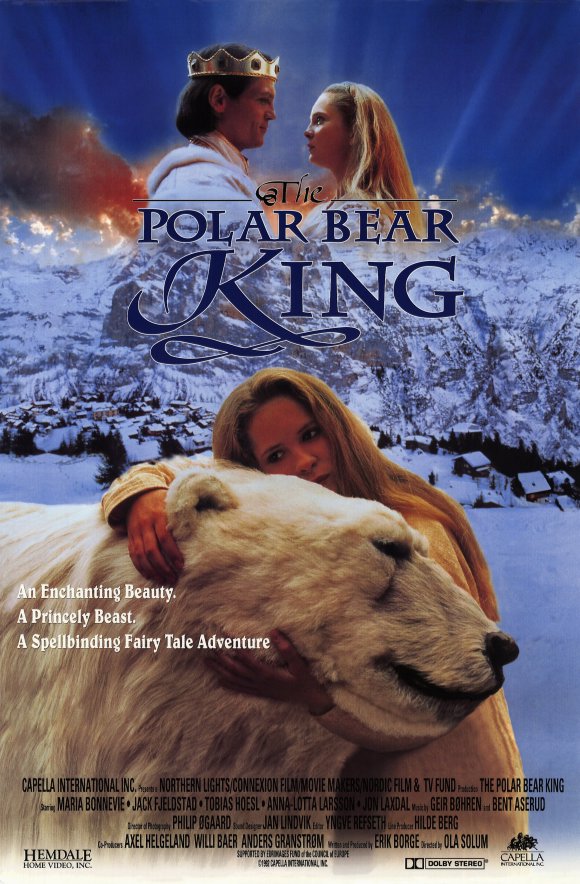
Dream Factory: The Polar Bear King

The Polar Bear King
Director: Ola Solum
Original release date: Capella International/Nordisk Film & TV Fond 1991 (Norway/Germany)
US release date: Hemdale Films 1994
US DVD release date: Mill Creek 2011
Streaming: Hulu
Rating: Not rated
Grade: C+

From IMDB: "After his father is killed, King Valemon ascends the throne, only to be turned into a polar bear by a bitter witch who wants to be his queen. Valemon must find a bride in the seven year span that he'll be a polar bear, and so he travels to Winterland and finds a wife to take home. Although they are happy, she is not allowed to look upon his face when he turns back into a man at night. When she breaks this rule, Valemon will be trapped to the witch forever."

The Polar Bear King is a very straightforward, faithful adaptation of the fairy tale "Valemon the Bear King," which has striking similarities to "East of the Sun, West of the Moon."  As a family film, I did not expect the text to be subverted in any way, but I was a little disappointed that there was no new spin on the story.  The characters were all extremely archetypal, as in the original tale, and I feel I would have better enjoyed the film had the characters been fleshed out and developed into individuals particular to the film, rather than stock characters who could be inserted into nearly any fairy tale.  But for those simply looking for a film version of "Valemon," it's well-made and enjoyable.

The version streaming on Hulu is the English dubbed version, so I cannot speak of the original Norwegian audio, but I found the dub rather distracting.  It's far from being a terrible 1960's dub such as was given to Speed Racer or Godzilla, but it is obvious (to adults, at least) that it's a dub.  The voices don't quite fit the characters, and the acting is often rather wooden and detached.

As for more technical aspects, the special effects are beginning to show their age.  I read somewhere that Jim Henson's Creature Shop was involved with the animatronics.  For comparison, the effects used in The Storyteller seem to have aged better, but it's been a few years since I watched that series. The costumes and sets are both decently constructed, though not nearly as elaborate as what one would expect from a Hollywood film.  It all reminded me very much of the production values of the BBC adaptation of the Narnia books.

The Polar Bear King is well-suited to families looking for all-ages fantasy fare, but not for those looking for an innovative spin on an old classic.


Sunday, October 20, 2013

Once Upon a Time...With Just a Pinch of Pixie Dust

Once Upon a Time Season 3 Episode 3: "Quite a Common Fairy"
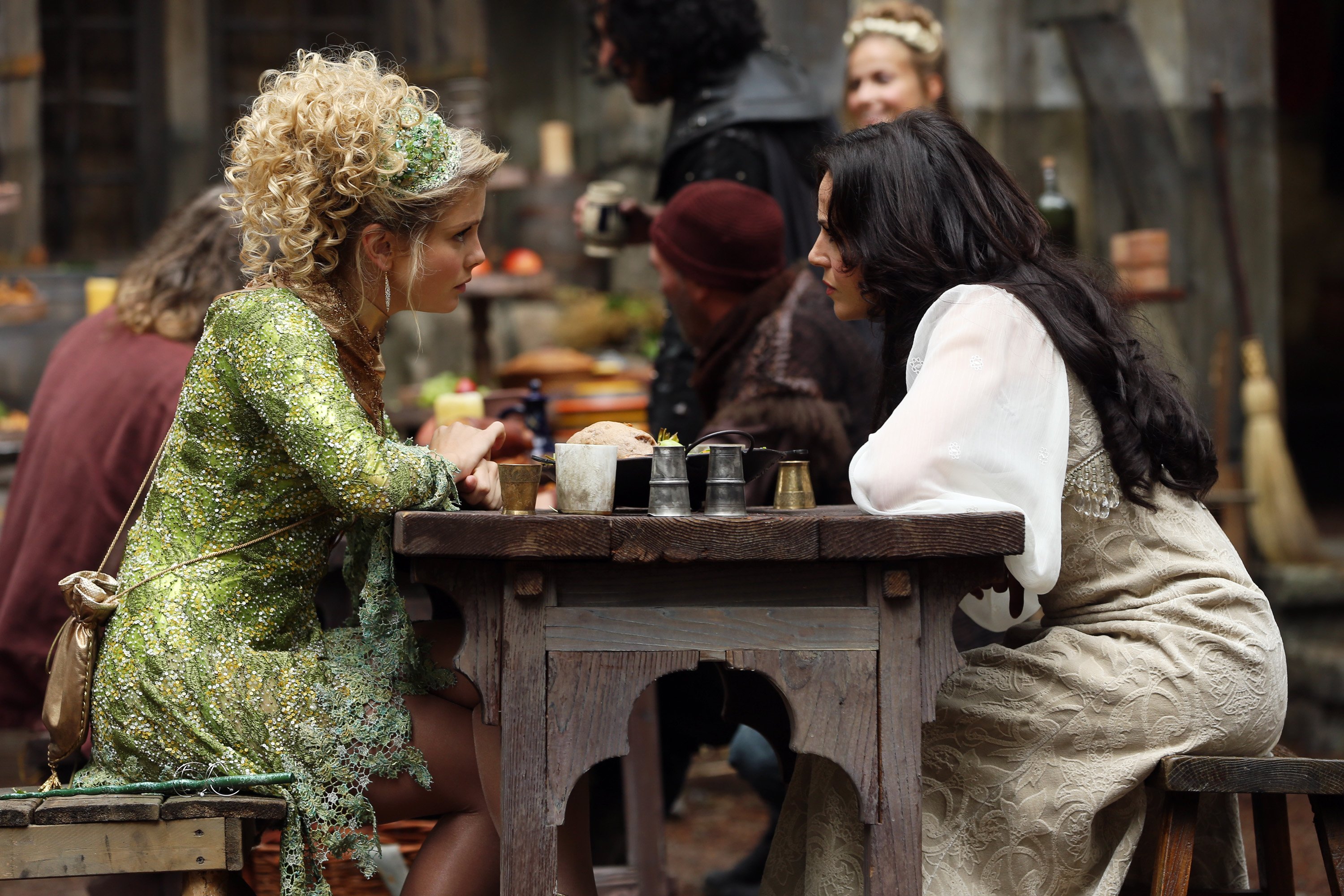
In the fairyback, Regina, newly married to Snow's father, leads a sorrowful existence.  While Rumpel instructs her to channel her anger into her magic, Regina instead thinks of suicide.  When a bannister falls away and Regina plummets to her death (deliberate or not), a fairy appears and rescues her.  The fairy, Tinkerbell, goes with Regina to a pub, where Regina talks about the problems in her life.  Tinkerbell, certain that all Regina needs is to find happiness again, promised to help her.  Upon returning to the fairies' dwelling, however, the Blue Fairy commands Tinkerbell to abandon the endeavor, claiming that Regina is beyond help and in the grasp of Cora and Rumpel.  This only serves to convince Tinkerbell all the more that Regina needs her help.

That night, Tinkerbell steals pixie dust from the fairies and goes to Regina's room, where she sprinkles it on her.  The two fly away, following a trail of green dust to Regina's soulmate.  The dust leads them to a tavern; Tinkerbell goes inside first to determine who the dust indicates, and returns to Regina, telling her to speak to the man with the lion tattoo on his arm.  Tinkerbell then flies away, leaving Regina to her future happiness.  However, Regina panics and runs away without ever entering the tavern, let alone speaking to the man.

Arriving back at the fairies' dwelling, Tinkerbell is chastised by the Blue Fairy, who is aware of all Tinkerbell did.  Tinkerbell argues that they were taught to believe in second chances, but the Blue Fairy counters that this was Tinkerbell's second chance before stripping her of her wings and magic.

In Neverland, the narrative is split between Henry and the group searching for him.  Henry is forced to play William Tell by Pan and his Lost Boys.  He expects to be the "victim," but instead is given a crossbow and told to fire the apple off another boy's head.  Instead, Henry fires at Pan, who catches the arrow.  Pan then explains that he's been waiting for Henry since he was born, as Henry is the only one with a strong enough belief in magic to restore it to the dying lands.  Henry argues that Emma is the savior, but Pan explains that she is only such for having birthed Henry, a child equally of light and darkness.  He then gives Henry a slip of paper, upon which is a drawing of Henry with the caption "The truest believer", seemingly drawn long before Henry was born.

As the group searches for Henry, they realize that his location on the map has changed, indicating that Pan's camp is on the move.  Hook suggests finding Tinkerbell, whom he has worked with in the past, and asking for her help.  All but Regina are in agreement.  Regina tries to convince Emma to combine their magic and attack Pan head-on, but Emma refuses, fearing for Henry's safety.  The group press on, with Regina hanging toward the back.  She drops her handkerchief, which is picked up by someone who apparently is tracking them.

Hook pulls David aside, and the two discuss his wound.  With only weeks to live at most, Hook advises David to tell Snow, but David does not, believing if they find Tinkerbell and her pixie dust that he will be cured.

Having reached Tinkerbell's home, Regina remains behind, stating that she's sure Tinkerbell will refuse to help if she knows Regina is with them.  As the rest of the group moves on, Regina waits on a log and is soon after knocked out with poppy dust by noneother than Tinkerbell.  Finding her house empty, the others return to find Regina missing, only her handkerchief left behind.

Tinkerbell holds Regina at spearpoint, demanding to know why she lied about the pixie dust failing to work all those years ago.  Regina admits that she was afraid to enter the tavern, and Tinkerbell explains that because of her she lost all of her magic.  Regina removes her own heart, showing Tinkerbell how black it has become.  She explains that if Tinkerbell kills her, Tink will be no different than her and her own heart will grow black.  But if Tinkerbell helps her to find Henry, she will be the good fairy she always wanted to be.  Tinkerbell returns Regina's heart, but refuses to help.  At that point, the others find them and convince Tinkerbell to help, although they are disappointed to learn that she is human.  As they resume their trek, Tinkerbell tells Regina that she didn't just ruin her own life by not entering the tavern but the life of the man with the lion tattoo, as well.

Meanwhile, in the Enchanted Forest, Neal searches madly for a magic device that can lead him to Neverland, certain that something has happened to Henry.  Robin Hood's band of Merry Men enter the room, along with Robin's son, Roland, and Neal realizes that Roland is the key to Neverland.  After convincing Robin that his plan will not endanger Roland in any way, Robin reluctantly agrees.  Robin, Neal, and Mulan hide behind various pieces of furniture, while Roland stands at the window and says, "I believe."  After nothing happens immediately, Neal asks Roland to say it again, but Robin reminds him that the deal was for him to say it only once.  Suddenly, the shadow appears to take Roland to Neverland.  Mulan stabs it and pulls Roland to safety, as Neal lunges at its foot and it taken to Neverland.

Robin invites Mulan to join his Merry Men, impressed by her tactical skill, but she says there is someone she must speak with first.  Remembering how Neal regretted not having told Emma he loved her, Mulan resolves to tell her special someone.  Returning to Aurora's palace, she says that there is something she must tell her; Aurora also tells her she has news to share.  Letting Aurora tell first, Mulan is stunned to learn that Aurora is pregnant.  Visibly upset, Mulan tells Aurora that she will be joining the Merry Men, rather than confessing her unrequited feelings.  Returning to Rumpel's castle, Mulan is welcomed by Robin, who is the man with the lion tattoo.

I was so glad that Regina received some much needed character development this episode!  It was a great move to explain her motivations for becoming a villain and her fears of remaining unloved and alone.  I felt this was something most people could relate to, and it really served to humanize Regina, who for so much of the series has been unjustly considered "evil."  The one thing this show consistently does well is to create sympathetic villains, characters who are truly grey.  I wish the same could be said of the heroes.

Speaking of which, the Blue Fairy demonstrates once again that good simply means self-righteous blowhard in the world of Once Upon a Time.  I found utterly ridiculous that Tinkerbell was chastised for attempting to help someone who quite obviously was in need of help simply because of said person's associates.  And, of course, for Tinkerbell to have been punished as she was just serves to emphasize that sometimes the real villains are those professing to do good.  Unfortunately, I think the writers are unaware of this since all of their supposed "good" characters are written in this way.

Tinkerbell, as she was portrayed in the fairybacks, is the closest example of true good yet to be seen on the show.  Someone who genuinely wants to help all people, regardless of their past deeds or associates.  And, while I enjoyed the jaded Tink in Neverland, I really hope that something along her journey inspires her to return to being the idealistic person she was.

I have seen numerous articles popping up about Mulan's sexuality, and while I applaud the portrayal of a character outside of hetero-normative behavior on a so-called family program, I think it was too easy to insert queerness into Mulan.  Perhaps it's even expected.  While other female characters on the show have shown battle prowess, none of them wore men's armor or served in the military, so there is already an expectation that Mulan is somehow "other."  And, yes, her appearance on the show is more feminine than that of the film, but we never see her in any other garb.  I think it would have sent a stronger message of acceptance to have outed an overtly feminine character, a princess type.  And it would be even more powerful to have her love returned.  While I enjoy drama as much as the next person, this smacked a bit too much of the tragic lesbian novels written in the mid-twentieth century.  This show has claimed time and again that everyone deserves a happy ending, even Rumpel, even Regina.  So what about Mulan?  I hope she finds her happy ending by series end, regardless of where her new lover falls on the spectrum.  Ideally, though, the person will not be a cis-man, as that would be back-pedaling, and Mulan deserves better.  Once outed, she should remain so.

My only real complaint with this episode was that, once again, the writers are rushing things by having Neal reach Neverland already.  While I'm excited to see what transpires with Neal returning to a place from which he fought so hard to escape, I wish the writers would pace themselves.  I don't want Henry to be rescued by mid-season and a new evil come forth, like last season with Cora and the mundies.  I know that mainstream audience's have terrible attention spans, and the producers and writers want the show to remain accessible to the lowest common denominator, but I think slowing down a tiny bit wouldn't be that detrimental to the audience-at-large and would be a great help to show.

I apologize if I sounded a bit ranty this week.  It was a good episode (one of the better ones without Rumpel), and I think it made a good deal of progress with some of the characters who typically don't get the attention they deserve.